
How to Identify Contributors on Wikipedia and the Average Cost of Legal Fees
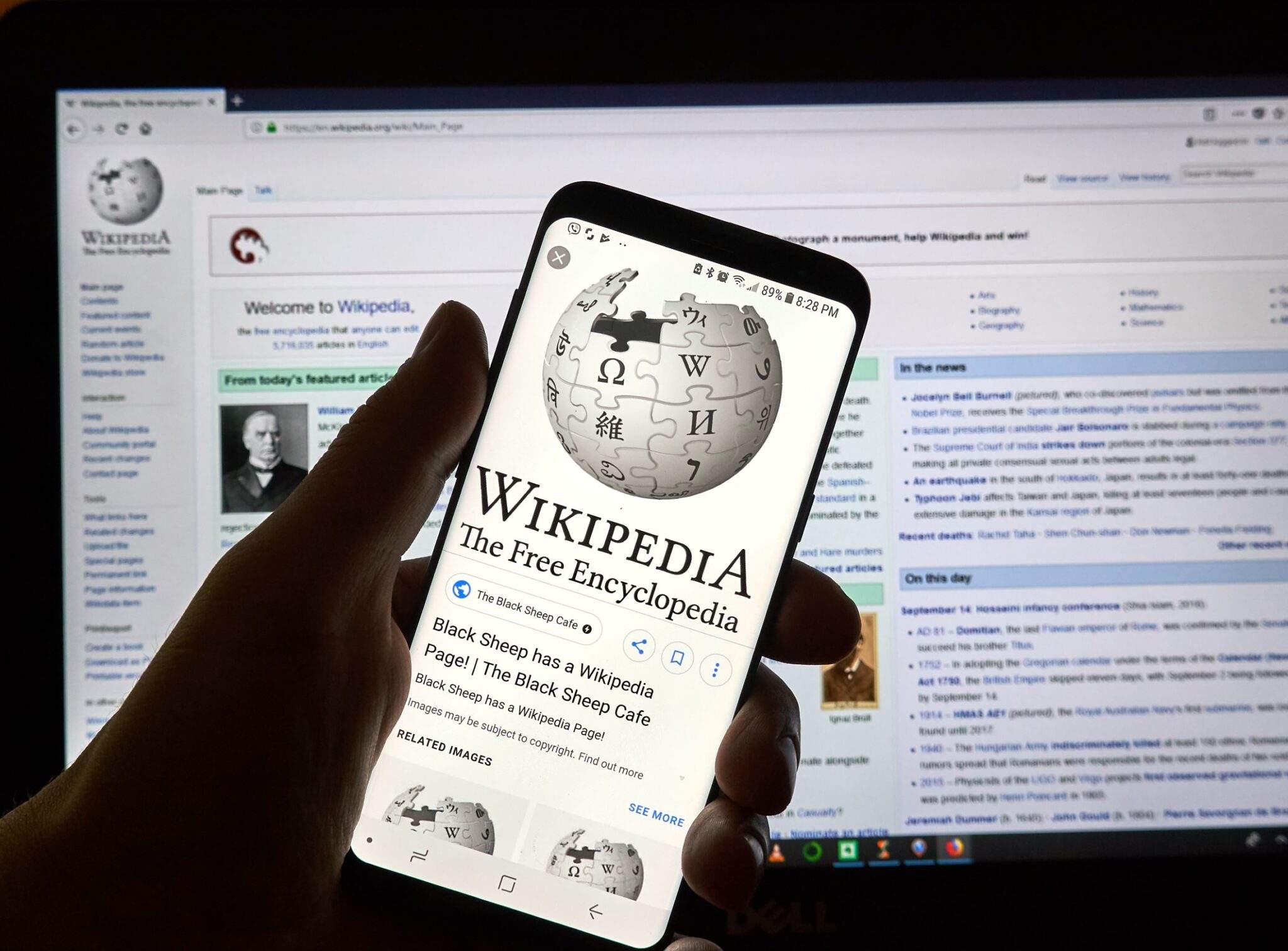
Wikipedia is an internet encyclopedia operated by the Wikimedia Foundation. It is available in various languages worldwide, and anyone with access to the site can write or edit articles. Therefore, there is a risk that defamatory or slanderous articles may be posted.
When such content gets posted on Wikipedia, can the author of the article be identified? How much would the legal fees be in such a case? In this article, we will explain how to identify Wikipedia contributors and the average cost of legal fees.
What is Wikipedia?
Wikipedia is characterized by its significant difference from traditional encyclopedias edited by experts, in that, it allows general internet users to edit its content. Another notable feature is that the majority of people who perform editing and operational management, excluding staff of the Wikimedia Foundation, are volunteers.
On Wikipedia, one can create their own account and write or edit articles. One can do so even without creating an account and logging in, but there are restrictions such as not being able to make personal settings or vote in contests.
If you search for a person’s name or a company name and an article comes up, you can check their biography, overview, and history. By downloading the Wikipedia app, you can read articles not only on the site but also on the app.
Examples of Defamation Posted on Wikipedia
What kind of defamatory articles could potentially be posted? Here are some examples:
- Posts that infringe on privacy (e.g., “A (real name) lives on the 25th floor of Roppongi Hills”)
- Posts that could potentially be charged with crimes such as defamation, insult, or credit defamation by damaging the reputation or honor of others (e.g., “B (real name) has a criminal record.”)
The above examples of posts can be requested for deletion in accordance with Wikipedia’s “Deletion Policy”. When a deletion request is made, Wikipedia users deliberate on the course of action, and based on the results of the deliberation, administrators or deleters carry out the deletion. If the article is not deleted despite the deletion request, or if significant damage has been suffered due to the post, even if it has been deleted, the ‘contributor’ can be identified through a specific procedure. Once the contributor is identified through this procedure, it is possible to claim damages from the person. The flow of the identification procedure is explained below.
Step 1 of Identifying the ‘Contributor’: Request for IP Address Disclosure
The first step in the procedure to identify the contributor is to request the disclosure of the IP address.
What is an IP Address?
An IP address is a number used to identify devices (PCs, smartphones, etc.) connected to the Internet. It serves a role similar to a physical address or telephone number on the Internet.

As displayed in the figure, one can create an account on Wikipedia by registering a username and password. Note that an email address is optional. According to the Wikipedia FAQ, it is stated as follows:
Do I have to use my real name?
https://en.wikipedia.org/wiki/Wikipedia:FAQ/Contributing#Do_I_have_to_use_my_real_name%3F
No. Real names are not required; some Wikipedians use real names, some don’t
Therefore, it is not necessary to use your real name as your account username.
Therefore, Wikipedia operators, in many cases, do not have much personal information about the people who post. Hence without disclosing the IP address, it is impossible to identify the contributor. Note that on Wikipedia, you can edit articles without logging in, but in that case, your IP address is recorded in the public history.
Request for Disclosure of the Contributor’s IP Address
The request for IP address disclosure is made through a court. If an article is deemed to fall under the “Deletion Policy” of Wikipedia, a deletion request can be made, and if the user’s deliberation is concluded, the post may be deleted. However, if the article is not deleted even after making a deletion request, a method of requesting the disclosure of the IP address exists.
A ‘sender information disclosure request (発信者情報開示請求)‘ can be made through provisional disposition, not only by litigation. While litigation can take over a year in prolonged cases, a provisional disposition ends within 1-2 months.
Then, how much does it cost to request a lawyer to delete an article and disclose the IP address?
According to information on the Internet, the market price for attorney fees when requesting the deletion of articles and the disclosure of IP addresses is:
Approximately 300,000 yen for the retainer fee, and approximately 300,000 yen for the performance-based compensation.
https://monolith.law/reputation/reputation-lawyers-fee
However, this is just an estimate of the costs, and may vary depending on the content and number of words in the article.
Proof of Illegality of the Post
In order to get the court to issue an order to disclose the IP address, it is necessary to prove the illegality of the Wikipedia article. Such order is issued only when the court recognizes the illegality of the article in concern.
If one deems a Wikipedia article to fall under the “Deletion Policy”, they can file a deletion request, and the article may be deleted upon deliberation. This does not necessarily suggest that the article is illegal. Even if an article is technically not illegal, there are cases where they become deleted as a result of deliberation.
On the other hand, in order for the court to issue an order to disclose the IP address, the following two are required:
- A legal argument showing the illegality of the post
- Evidence to support the above claim
You must legally argue which part of the post is illegal and find evidence to support its illegality.
In addition, litigation procedures against foreign corporations involve additional costs such as the English translation of evidence and documents.
It could be difficult to legitimately conduct such consultations and collection of evidence on your own without the help of a lawyer who is experienced in handling cases of defamation on the Internet.
Step 2 of Identifying Contributors: Prohibition of Log Deletion

If an order to disclose the IP address is issued in Step 1, and the IP address is obtained, the internet provider through which the person who made the post was connected to can then be identified. Providers keep the logs of users from the IP address. However, these logs have a retention period and are not kept indefinitely. For fixed lines, the logs are kept for about a year, but for mobile lines, the retention period is shorter, and they are deleted after about three months. Therefore, you must obtain a prohibition order from the provider to prevent the deletion of the logs and have them preserved. To obtain this prohibition order, you need to initiate a separate legal procedure from the above-mentioned IP address disclosure request.
However, there are cases where the logs can be preserved without going through a legal procedure if you issue a notice stating, “We are about to request the disclosure of the contributor’s name and address, so please keep the logs without deleting them for a while.” Therefore, it is advisable to send a notice first, rather than immediately initiating a lawsuit. However, even if one only issues a notice, it is necessary to assert and prove the illegality of the relevant post.
The legal fees for the creation of such notices by a lawyer can be expected to be around 100,000 yen. As there is not much information or examples available online, it is advisable to seek the help of a lawyer who has expertise in these procedures.
Step 3 in Identifying the Contributor: Request for Disclosure of Address and Name
After sending a notification to request the log preservation in Step 2, the next step will be initiating a lawsuit against the provider to disclose the contributor’s address and name. Requesting the disclosure of their address and name cannot be done through a provisional disposition, but requires a legal procedure. For example, even if an article stating “The president A of ○○ Corporation is evading taxes” gets posted on Wikipedia, if there is proper substantiation and evidence behind the statement, and if the disclosure of its content is in the public interest, it may be argued that the privacy of the contributor should be respected. One’s address and name are particularly important personal information. Therefore, the court will only issue a disclosure order when it determines through formal legal procedures that the post is illegal.
The average legal fees for requesting a disclosure procedure for one’s address and name are:
A retainer fee of about 300,000 yen and a performance-based compensation of around 200,000 yen.
https://monolith.law/reputation/reputation-lawyers-fee
Step 4 in Identifying the Contributor: Claim for Damages
If you win the lawsuit for the disclosure of the name and address in Step 3, the name and address of the contract holder of the line used when posting the relevant Wikipedia article will be disclosed. Once the name and address are disclosed, it is possible to identify the contributor, and you can also claim damages from the contributor, such as the legal fees and consolation money incurred in the series of procedures.
If you make a claim for damages to the contributor and apply it to the legal fees, the victim will not have to bear any financial burden. However, there is a risk that the contributor may not be identified, or even if identified, the damages may be less than the legal fees, which may result in a financial burden. We explain this point in detail in the article below.
Summary
Wikipedia, being an encyclopedia that anyone can freely edit, sometimes contains posts that could be considered defamatory. If malicious posts are made on Wikipedia, identifying the contributor requires several legal procedures as mentioned above. If the contributor is successfully identified, it becomes possible to claim damages from them. However, the legal fees involved in these procedures are not insignificant, so even if damages are paid, they may not cover the losses. The process of identifying the contributor is not a simple one. Therefore, if you are troubled by malicious posts on Wikipedia, it is strongly advised to consult a lawyer who is knowledgeable about online defamation measures.

Category: Internet
Related Articles

Removal of Defamatory Articles: What is the Simpler 'Provisional Measures' Alternative to Litiga.
Internet

How Far is Trademark Similarity Permissible? Explaining the Criteria for Similarity and Cases of.
Internet


Rampant 'False Claims of Intellectual Property Infringement' on Amazon: Explaining Legal Respons.
Internet