
[2025 Edition] Legal Interpretation of Crypto Assets: When They May Be Treated as Securities and Key Considerations for Operators
![[2025 Edition] Legal Interpretation of Crypto Assets: When They May Be Treated as Securities and Key Considerations for Operators](https://monolith.law/en/wp-content/uploads/sites/6/2025/08/Shutterstock_2049735344.webp)
As crypto assets continue to diversify in type, use, and transaction method, legal interpretations are evolving. A particularly important issue for businesses is whether a given crypto asset may be treated as a security.
This article outlines key developments in the interpretation of crypto assets—especially in relation to their classification as securities—focusing on practical points for operators in the digital-asset space.
Traditional Perspectives and Emerging Trends in Crypto Assets
Traditionally, crypto assets such as Bitcoin and Ethereum, which function primarily as mediums of exchange, have tended to be viewed as “commodities” rather than securities.
In recent years, however, crypto assets with additional functions have emerged. Some are designed not only as mediums of exchange but also to confer service-usage rights, governance or voting rights in a project, or entitlement to profit distributions. As crypto assets become more multifunctional and more explicitly investment-oriented, a uniform “commodity” classification becomes harder to maintain.The Debate on Ethereum’s Change in its Consensus Algorithm and Securities
The Debate on Ethereum’s Consensus Algorithm Change and Securities

One development that has drawn particular attention is Ethereum’s shift in consensus algorithm from Proof of Work (PoW) to Proof of Stake (PoS). This change has prompted discussion about whether it could increase the likelihood of Ethereum being treated as a security.
What Is a Consensus Algorithm?
A consensus algorithm is the mechanism by which a blockchain network’s participants (nodes) agree on which transactions are valid and which new blocks are added to the chain.
To understand consensus algorithms, it helps to understand the basic structure of crypto assets. Many crypto-asset systems rely on a blockchain in which transactions are validated and recorded under rules designed to maintain the transaction’s security and integrity. The consensus algorithm is the method used to achieve network-wide agreement on those rules and outcomes.
Related article: What Makes Blockchain a Revolutionary Technology?
Changes Made to Ethereum’s Consensus Algorithm
Historically, Ethereum used PoW, the same general approach adopted by Bitcoin.
In September 2022, Ethereum transitioned from a PoW to a PoS consensus mechanism.
- PoW (Proof of Work): A method that reaches consensus through competition for computational resources.
- PoS (Proof of Stake): A method that grants block-production rights based on the amount of crypto assets held.
Ethereum’s goal in moving to a PoS consensus mechanism was to address the high energy consumption commonly associated with a PoW consensus mechanism.
The Latest Views from U.S. Authorities on Crypto Assets
The Introduction of Ethereum Spot ETFs
In September 2022, U.S. Securities and Exchange Commission (SEC) Chair Gary Gensler indicated that crypto assets using a PoS consensus mechanism could be viewed as securities under U.S. law. Although he did not name specific assets, the timing—immediately following Ethereum’s transition to a PoS consensus mechanism—drew significant market attention.
Reference: Bloomberg: SEC Chair Gensler Raises Concerns Over ‘Staking’ Model on Ethereum
In May 2024, the SEC approved the listing of Spot Ethereum ETF, a development suggesting that regulatory authorities may not fully consider Ethereum as a security at all, which may influence future interpretations.
Determining Whether a Crypto Asset Is a Security: The Howey Test
In the United States, the Howey Test is commonly used to evaluate whether crypto assets can be considered as securities or not. In general terms, it focuses on the following elements:
- Whether an investment has been made,
- Whether is was done within a common enterprise,
- Whether there is a reasonable expectation of profits,
- Whether that profit was derived from the efforts of others.
The Howey Test is not an absolute standard and also takes into account specific facts and circumstances to determine whether or not a crypto asset can be considered as a security.
Regulation and Recent Trends of Crypto Assets in Japan
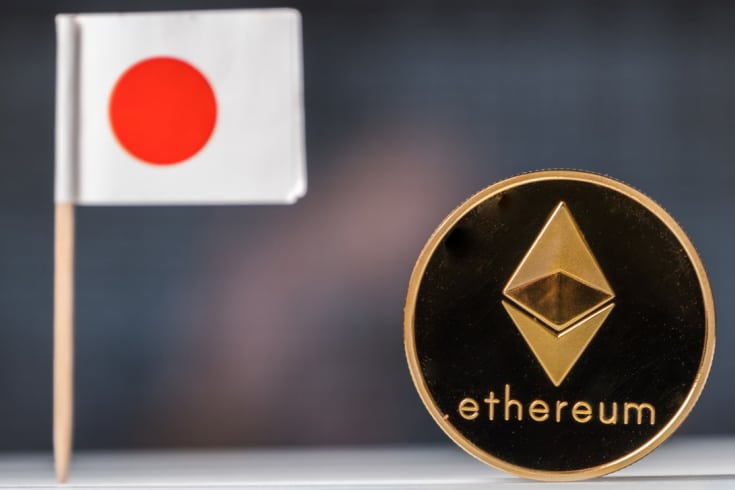
In Japan, crypto assets are regulated under the Payment Services Act. However, if a particular crypto asset is deemed to be considered as a security, it may also become subject to the Financial Instruments and Exchange Act (FIEA).
Related article: Legal Regulations for Crypto Assets in Japan
Regulations on the Issuing of Securities in Japan
If a crypto asset is treated as a security, the following regulations governing the issuing of securities may apply:
- Disclosure of a securities registration statement (Article 5 of the FIEA)
- Delivery of a prospectus to relevant parties (Article 15(2) of the FIEA)
- Filing of securities reports (Article 24 of the FIEA)
- Filing of quarterly reports (Article 24-4-7 of the FIEA and Article 4-2-10(3) of the Financial Instruments and Exchange Enforcement Order)
Regulations on Transactions Under Japanese Law
If a crypto asset is treated as a security, the following regulations governing securities transactions may also apply:
- Insider trading restrictions (Articles 166 and 167 of the FIEA)
- Prohibitions on market manipulation (Article 159 of the FIEA)
- Restrictions relating to the dissemination of rumors (Article 158 of the FIEA)
- Prohibitions on fictitious transactions (Article 159 of the FIEA)
Recent Trends in Legal Revisions in Japan
With respect to taxation involving crypto assets, the 2022 tax reform revised valuation methods for certain crypto assets held by corporations. For individuals, gains from transferring crypto assets are generally treated as “雑所得” (Miscellaneous Income) under “総合課税” (Comprehensive Taxation), but tax reform discussions continue, including proposals such as a “申告分離課税” (Separate Taxation with Tax Return) framework.
With respect to amendments to the FIEA, Japan’s Financial Services Agency (FSA) has been considering classifying crypto assets as “financial products” and introducing insider trading regulations. In April 2025, the FSA submitted a related draft amendment.
Japan has also tightened operational rules for crypto-asset exchange operators. In June 2023, it implemented the Travel Rule, introducing notification obligations for certain transfers, and it has strengthened requirements for segregated management of customer assets.
Conclusion: Consult a Lawyer Regarding Crypto assets Regulations
Determining whether crypto assets are treated as securities under the law, remains difficult in current circumstances. That said, crypto assets with multiple functions—particularly those with investment-like features—may be more likely to be evaluated as securities depending on their structure and offering.
Operators should monitor legal developments and regulatory trends in Japan and abroad and build compliance frameworks that can respond promptly if the crypto assets they handle are deemed to fall within securities regulations. Because the regulatory environment is expected to continue evolving, consulting counsel with relevant expertise can be an effective way to manage uncertainty and reduce risk.
Guidance on Measures by Our Firm
Monolith Law Office is a law firm specializing in IT- and internet-related legal matters, including legal support for crypto-asset and blockchain businesses. We advise businesses that have launched—or are preparing to launch—crypto-asset-related services on legal risk and compliance matters under Japanese law, and we support practical structuring and compliance planning to help clients address regulatory requirements without unnecessarily disrupting operations.
Areas of practice at Monolith Law Office: Crypto assets & Blockchain

Category: IT