
What to Do When an Accident Occurs in a Nursing Care Facility? Explaining Legal Responsibilities and Response Measures
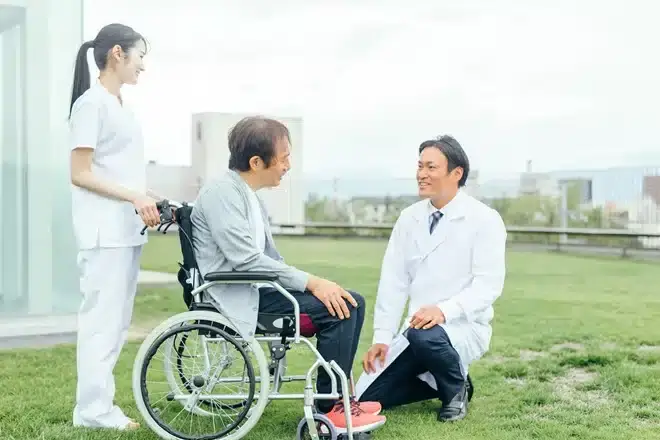
Accidents in caregiving facilities are a critical issue directly linked to the safety and lives of the users. In the event of an accident, not only must one address the concerns of the users and their families, but also undertake various tasks such as submitting accident reports to the administration. Should a lawsuit be initiated by a user or their family, one must also deal with the legal issues that arise.
This article provides a detailed explanation of specific examples and causes of caregiving accidents, methods of response, and measures to prevent recurrence. By understanding the procedures for responding to accidents and strategies for their prevention, it is possible to ensure the safety of both users and staff, and to maintain an environment where everyone can feel secure and at ease.
Definition of Care Accidents in Facilities Under Japanese Law

Care accidents refer to incidents that occur during the provision of care services, both inside and outside of facilities, ranging from minor injuries like scrapes to severe accidents that can lead to death.
The “Care Accident Prevention Guidelines” published by Mitsubishi Research Institute, Inc. define care accidents as follows:
Instances occurring within the facility and during outings accompanied by staff where there was actual harm to the life or body of the user, or where there was a potential for harm requiring observation (regardless of the facility’s responsibility or whether it was an error).
Source: Mitsubishi Research Institute, Inc. | Care Accident Prevention Guidelines for Special Nursing Homes
This article will explain based on this definition.
Accident Case Studies in Japanese Nursing Care Facilities
According to a survey report by the Public Interest Incorporated Foundation Nursing Care Labor Stability Center, the occurrence of accidents in nursing care facilities in Japan is as follows (with serious cases generally involving hospitalization within 30 days):
| Nursing Care Accidents (276 cases) | Percentage |
| Falls, Tumbles, and Slips | 65.6% |
| Choking, Mis-swallowing, and Aspiration | 13% |
| Accidents During Transportation | 2.5% |
| Being Caught in Doors | 0.7% |
| Stealing or Eating Inappropriate Items | 1.4% |
| Other | 5.8% |
| Unknown | 12% |
Here, we will explain the details of accidents by scene.
Accidents During Movement and Transportation
Accidents in nursing care are prone to occur during movement and transportation. For example, during transportation to and from the nursing care facility or when moving from a room to another area such as the bathroom or toilet, there are cases where falls can lead to fractures or contusions.
Specific examples of accidents include:
- Falling while moving from the bed
- Falling while transferring from a mechanical bath wheelchair to a regular wheelchair
- Falling while getting off the transport vehicle
- Falling while moving to the toilet alone
Particularly, toilets being private spaces, there is a risk of delayed discovery in the event of an accident.
Accidents During Meals
Choking, mis-swallowing, and aspiration, which rank second in the incidence rate of nursing care accidents, are prone to occur during meals. Specific examples of accidents include:
- Providing food that was too large for the user to swallow, leading to choking
- Continuing meal assistance without checking for remaining food in the mouth, leading to choking
Choking accidents, while less frequent than falls, can result in lasting disabilities or, in the worst-case scenario, lead to death by suffocation.
Accidents During Bathing
Accidents during bathing are also among the scenarios where incidents are likely to occur. Specific examples of accidents include:
- Falling in the bathroom
- Becoming ill and drowning during the bath
- Causing burns due to excessively hot shower temperatures
Especially in winter, there is a risk of heat shock due to the temperature difference between the inside and outside of the bathroom. Heat shock occurs due to sudden temperature changes, so it is necessary to take measures to minimize the temperature difference between the bathroom and the changing area.
Potential Situations Arising from Nursing Care Accidents
There are various cases that can occur due to nursing care accidents. Below, we will explain specific situations.
Injuries or Death of Service Users
Falls or choking can lead to injuries such as fractures and contusions. These injuries can range from minor to severe with lasting after-effects, and in the worst-case scenario, may even result in death.
Mental Burden on Staff Who Cause Nursing Care Accidents
Staff who cause nursing care accidents may experience self-blame and mental pressure, carrying a significant burden.
Not only when they cause injury to a service user, but also due to complaints from the user’s family or the risk of litigation, they may be subjected to intense stress. As a result, they may feel mentally cornered and consider resigning.
Risk of Being Sued by the Service User’s Family
When a nursing care accident occurs, there is a risk of being sued by the service user’s family. It is common for discussions to take place between the facility and the user’s family regarding the explanation of the accident and legal responsibilities afterward.
However, if the family is dissatisfied with the facility’s response, cannot agree, or has a different understanding of the cause of the accident, negotiations may not proceed smoothly. In such situations, if discussions fail, there is a risk of being sued by the family.
Causes of Accidents in Nursing Care
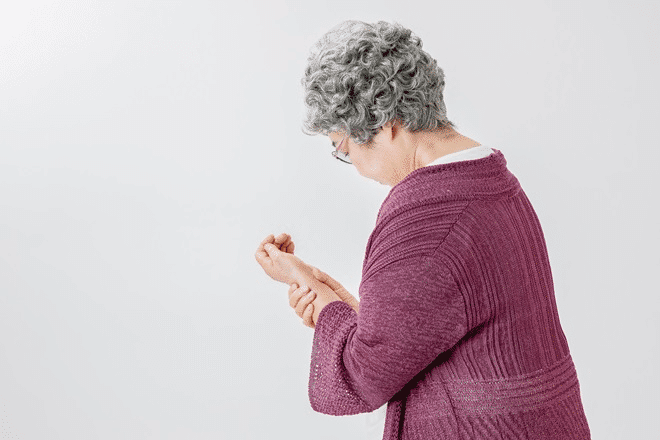
The causes of accidents in nursing care can be divided into two main categories: those attributable to the care staff and facilities, and those related to the users themselves. Here, we will explain the details of each.
Cases Attributable to Care Staff and Facilities
The first category involves cases where the care staff or facilities are the cause. The detailed causes include:
- Shortage of staff
- Fatigue and stress among staff
- Lack of staff training
- Facility environment inadequacies and disorganization
When there is a shortage of staff, information sharing may not function well, creating a risk that necessary services cannot be provided to users. Long working hours and increased burden on individual staff members can lead to the accumulation of fatigue and stress, dulling judgment and potentially leading to accidents.
If staff are not adequately trained, they may not be able to provide proper assistance, increasing the risk of accidents. Furthermore, facility-related causes such as uneven surfaces, obstacles, slippery floors, or lack of organization can also lead to accidents.
Cases Attributable to Users
Accidents in nursing care can also be caused by the users themselves. For example, individuals with dementia or physical disabilities may not be able to make appropriate decisions or actions on the spot, leading to accidents. Additionally, age-related declines in muscle strength, physical fitness, and vision can also be contributing factors.
Nursing care plays an important role in supporting users to live independently according to their abilities. Therefore, it is necessary for users to do what they can on their own, depending on their condition. However, it is also true that encouraging this independence can carry the risk of accidents.
Furthermore, there are cases where users, not wanting to trouble the staff, attempt to act on their own beyond their capabilities. Such actions can lead to falls or choking, which are potential causes of accidents.
Legal Responsibilities in Nursing Care Accidents in Japan

When a nursing care accident occurs, legal responsibilities can be categorized into civil, criminal, and administrative liabilities. Here, we will explain each of these in detail.
Civil Liability
Under civil liability, the main responsibilities include tort liability (Article 709 of the Civil Code), employer liability (Article 715 of the Civil Code), and liability for non-performance of obligations (Article 415, Paragraph 1 of the Civil Code).
Tort liability arises when someone intentionally or negligently infringes on the rights or legally protected interests of another person. For example, if staff negligence in fulfilling their duty of care leads to an accident, they may be held responsible for their negligence.
Employer liability refers to the compensation responsibility borne by an employer when their employee (staff) causes damage to a third party in the execution of their duties. Often, when an accident occurs due to staff actions, it is the employer’s liability that is called into question.
Liability for non-performance of obligations arises when one fails to fulfill contractual duties, causing damage to the other party. For instance, if a facility fails to implement fall prevention measures at a location where a previous fall accident occurred, and another fall happens, the facility may be held liable for damages to the user.
Criminal Liability
Potential criminal liabilities include the crime of professional negligence resulting in death or injury (Article 211 of the Penal Code). This crime applies when someone neglects the necessary care required in their professional duties and causes injury or death, punishable by imprisonment for up to five years or a fine of up to one million yen.
While staff members may be individually liable, the business operator can also be held responsible. This is the case when an accident occurs due to the operator’s failure to fulfill their duty to avoid foreseeable risks.
Conversely, if there is no malicious act such as abuse, the likelihood of individual staff members being held responsible is generally low. Other potential criminal charges include the crime of abandonment by one responsible for protection (Article 218 of the Penal Code) and the crime of bodily injury (Article 204 of the Penal Code).
Administrative Liability
Administrative liability involves the Long-Term Care Insurance Act, and violations can lead to penalties such as revocation of designation or temporary suspension of the designation’s effect.
To receive designation, nursing care facilities must meet the staffing, equipment, and operational standards set by prefectural ordinances. If a nursing care accident occurs and the facility fails to meet these standards, there is a risk of losing its designation.
Furthermore, if a facility receives a revocation of designation, it will not be able to operate, and it cannot receive a new designation for five years from the date of revocation. (Article 70 of the Long-Term Care Insurance Act)
How to Handle Caregiving Accidents in Japan
When a caregiving accident occurs in Japan, swift and appropriate action is required. This article will explain the steps to take in the event of an accident.
Responding to Clients
When an accident occurs in a caregiving setting, the top priority must be the safety of the client. Ensuring the client’s safety involves checking for consciousness, breathing, and any injuries, and administering first aid such as CPR or stopping bleeding as necessary.
After taking the necessary measures, contact emergency services or the client’s primary physician. When calling an ambulance, it is crucial to provide the emergency responders with detailed information about the accident, as well as the client’s health condition, medication status, and medical history. Once the client’s safety is confirmed, apologize and explain the accident to the client as appropriate to the situation.
Since accidents may require CPR or first aid, regular training and preparedness are essential.
Responding to Families
After addressing the needs of the user, or concurrently, it is crucial to promptly contact the family, explain the details of the incident, and offer an apology. Delay in contacting the family can lead to distrust towards the facility, so a swift response is essential.
Some may worry that apologizing could be seen as an admission of fault on the part of the facility. However, failing to apologize and adopting an attitude as if the facility bears no responsibility can provoke resentment from the family. An apology from the facility acknowledges moral responsibility, not legal liability. Whether the facility has legal liability is determined by the courts, which is why the facility itself cannot make this judgment.
For instance, apologizing in a way that admits a breach of the facility’s duty to ensure safety, such as inadequate measures to eliminate a step, could be seen as an admission of legal liability and may be disadvantageous in court. Therefore, it is necessary to be cautious not to readily admit legal responsibility.
When apologizing, it is important to express regret from a moral standpoint to the family, regardless of the legal liability, and to show empathy for their feelings. This approach can help to soothe the family’s emotions.
If compensation is necessary, the facility should also explain the use of voluntary insurance and the process and timing of payments. The specific points to explain are as follows:
- The care facility has voluntary compensation insurance in place to prepare for any accidents that may occur.
- If an accident occurs due to the facility’s negligence, compensation will be paid through the insurance.
- To receive compensation, an investigation by the insurance company is required.
- The investigation will involve staff, users, and their families.
- Even if the facility is found responsible, the amount of medical expenses and consolation money cannot be determined until the symptoms are stabilized.
- If it takes a year for the symptoms to stabilize, compensation will be provided after more than a year from the occurrence of the accident.
※Symptom stabilization: A state where no further treatment effect can be expected for an injury caused by an accident, despite ongoing treatment.
Explaining the details of compensation after an accident can also contribute to the family’s peace of mind.
Supporting Staff
It is essential to make efforts to care for the mental well-being of staff members who are feeling the psychological burden of caregiving accidents. Unless the staff member intentionally caused the accident, it is crucial to avoid blaming them.
Instead of viewing it as an issue solely concerning the staff, it is important to investigate whether there were any problems with the organization, facilities, or staffing arrangements, and to pursue the causes of the caregiving accident. This approach helps in devising improvement measures. In the rare case that a staff member has intentionally caused an accident, it is necessary to conduct a proper investigation and take strict action.
Response to Relevant Parties
Following a caregiving incident, it is mandatory to create an incident report and submit it to the administration. Additionally, the facts of the accident must be reported to relevant parties, including the patient’s primary physician, the insurance company they are enrolled with, and attorneys.
In order to prepare the caregiving incident report and communicate with the relevant parties, a detailed explanation of the accident is essential. It is important to listen to the parties involved and any witnesses to accurately understand and record the circumstances of the accident. Furthermore, to prevent recurrence, it is necessary to raise awareness and caution among all staff members.
Concealing or Lying About Nursing Care Accidents Is Taboo Under Japanese Law
When a nursing care accident occurs, concealment or false reporting is strictly prohibited. If such actions are discovered, there is a risk of administrative sanctions, such as guidance from authorities or revocation of certification. Additionally, it could result in the loss of trust from the community.
If the accident becomes public and leads to litigation, any concealment or falsehood could work against you in court. Even if there was no intent to hide the incident on the part of the facility, individual staff members might still attempt to conceal it.
To avoid such situations, it is crucial not to place the blame solely on the staff member who caused the accident but to make concerted efforts to establish a system of response that involves the entire organization. This creates an environment where incidents are more readily reported and can be addressed swiftly and appropriately.
Consult an Attorney if You Face Unreasonable Demands in Japan
If you receive unreasonable demands from a family member due to a nursing care accident, it is advisable to consult an attorney. When faced with exorbitant compensation claims or demands that have no legal obligation from users or their families, it is necessary to respond calmly.
Once you comply, even once, there is a risk that the demands will escalate, making it even more difficult to deal with the situation. On the other hand, if the facility is deemed legally responsible, it must bear liability for damages. However, as mentioned earlier, it is the court that determines whether the facility has legal responsibility or not.
Until the presence of liability and the amount of compensation are determined, avoid making any hasty promises with users or their families. Consulting with an attorney can provide you with advice based on past cases and legal expertise, enabling you to take appropriate action.
Methods to Prevent Accidents in Caregiving
When accidents occur in caregiving, they present numerous challenges, including addressing the needs of clients and their families, investigating the incident, and dealing with potential compensation claims. Here, we will explain methods to prevent caregiving accidents before they happen.
Implement Preventive Measures Based on Near-Miss Incidents
To prevent caregiving accidents, it is crucial to collect near-miss incidents and make efforts to implement preventive measures. A near-miss in caregiving is an incident that could have led to an accident if circumstances had been slightly different.
Examples of near-miss incidents include:
- Reaching out to eat someone else’s meal
- Stopping a client just as they were about to leave the facility alone
- A wheelchair getting caught on a threshold, nearly causing a fall
According to Heinrich’s Law, proposed by Mr. Heinrich in 1929 (Showa 4), behind one serious accident, there are 29 minor accidents, and behind these, there are 300 near-miss incidents. This implies that if near-miss incidents continue to be overlooked, a serious accident could eventually occur.
Collect and share each near-miss incident, analyze them, and take measures for improvement to prevent major accidents from happening.
Regularly Conduct Meetings on Caregiving Accidents
In order to prevent caregiving accidents, it is also important to regularly create opportunities for discussions about them. If information about accidents is only shared among a limited number of people, there is a risk that other staff members may repeat the same mistakes.
Furthermore, collecting near-miss incidents is futile if the information is not shared. By setting a specific day each month to conduct meetings, sharing and reviewing near-miss incidents can not only lead to accident prevention but also to a change in staff awareness.
Create a Manual for Preventing Recurrence
To prevent caregiving accidents, it is essential to create manuals for recurrence prevention and post-accident measures. In the event of a caregiving accident, the incident should be analyzed and evaluated to identify the cause and take measures to prevent recurrence.
By documenting specific procedures and checklists in a manual, staff can understand how to respond in the future. Additionally, it allows for information sharing with staff who join after an accident has occurred. It is important not just to create a manual but to ensure it is well-known and shared among the staff.
Conclusion: Consult a Lawyer for Handling Nursing Care Accidents

It is an unfortunate reality that, despite all precautions, completely eliminating accidents in nursing care facilities is challenging. This is especially true for facilities serving individuals with dementia or physical disabilities. When an accident occurs, the tasks of notifying the affected parties, their families, relevant organizations, and managing staff responses can suddenly become overwhelming.
Moreover, should a resident or their family file a lawsuit, you will be faced with legal issues that require attention. Even if no lawsuit is filed, there may still be challenging situations in dealing with the residents or their families.
Since making the appropriate decisions on your own can be difficult for the facility, it is advisable to seek the assistance of a lawyer. By engaging a lawyer, you not only receive specific advice on how to handle the accident but also support in negotiations and document preparation, allowing the facility to respond with confidence.
Guidance on Measures by Our Firm
The caregiving industry in Japan is governed by various laws, including the Long-Term Care Insurance Act, the Elderly Welfare Act, and the Companies Act. Monolith Law Office serves as legal counsel for the National Association of Caregiving Service Providers and caregiving service providers in prefectures nationwide, possessing extensive know-how related to laws concerning caregiving businesses.
Areas of practice at Monolith Law Office: Corporate Legal Affairs for IT & Startups
Category: General Corporate
Tag: General CorporateIPO
Related Articles

Points to Note When Selling Imported Goods on Online Shops: Explaining the Japanese Customs Tari.
General Corporate

The History of 'Legal Cheating' in Formula 1 – The Endless Battle of Geniuses Over Loopholes in .
General Corporate


Is Using a Doctor's Recommendation as an Advertising Claim a Violation of the Japanese 'Pharmace.
General Corporate

What Beauty Salons Need to Know About Advertising Regulations Under the Pharmaceuticals and Medi.
General Corporate

Is Reselling More Than Just Tickets Illegal? What are the Specific Measures Companies Can Take t.
General Corporate