What is the Legal Responsibility of Shopping Mall Operators? Explaining the Cases Where Operators are Liable

Purchasing goods online has now become commonplace. According to the Ministry of Economy, Trade and Industry’s “Fiscal Year 2023 (Reiwa 5) Digital Transaction Environment Improvement Project (Market Survey on E-Commerce),” the market size of e-commerce transactions, even just for BtoC (business-to-consumer) transactions, has grown to exceed 24.8 trillion yen in 2023.
Amidst the market expansion, numerous issues have been reported concerning e-commerce transactions on platforms. For instance, in BtoC transactions, there have been troubles such as a user of an internet shopping mall (hereinafter referred to as “the mall”) purchasing a product from a store within the mall, only to find the product defective and unable to contact the store. In such cases, while the aggrieved mall user can pursue contractual liability against the store, the question arises whether the mall operator can also be held responsible.
This article will explain whether there are circumstances under which the mall operators may be liable to users who have suffered damages due to individual stores.
Legal Responsibilities of Mall Operators Towards Users Under Japanese E-Commerce Guidelines
According to the “Guidelines on E-Commerce and Information Property Transactions” (hereinafter referred to as “the Guidelines”) published in December of Reiwa 4 (2022) by the Ministry of Economy, Trade and Industry, mall operators are, in principle, not held responsible for damages incurred by users.
In a mall setting, individual stores and users engage in transactions for goods and services. Once an agreement to buy and sell an item is made between the two parties, a sales contract is established, obligating the store to deliver the goods and the buyer to pay the purchase price, as per Article 555 of the Japanese Civil Code. This fundamental rights and obligations relationship forms the basis of the transaction. Therefore, if a store delivers a different item, it constitutes a breach of contract (non-performance), and the user can demand an exchange from the store (a claim for substitute performance). Similarly, if a user fails to pay the purchase price despite the store delivering the goods, it results in a breach of contract (delay in performance), and after a demand for payment, the seller can terminate the sales contract as per Article 541 of the Japanese Civil Code.
Mall operators merely provide a “venue” for transactions and do not enter into a direct sales contract relationship with users regarding individual transactions between stores and users. Therefore, it is the individual stores that are held responsible as sellers in transactions with users.
However, the Guidelines do stipulate exceptions where mall operators may be held responsible.
When Mall Operators May Be Liable in Japan

Under Japanese guidelines, there are three exceptional circumstances where mall operators may be held responsible:
- When there is a possibility of misunderstanding that the seller is the mall operator
- When the mall operator actively guarantees the quality of specific products from a specific store as being superior
- When the mall operator knowingly neglects to address multiple significant product accidents beyond a reasonable period
We will explain these three circumstances in detail.
When Misunderstandings Arise That the Seller is the Mall Operator
According to the guidelines,
- There may be an appearance that is inevitable which leads mall users to mistakenly believe that the store’s operations are conducted by the mall operator themselves (Existence of Appearance)
- The mall operator is responsible for the existence of such an appearance (Attributable Cause)
- The mall user has made a transaction with the wrong business owner without significant negligence (Good Faith without Gross Negligence)
Under such circumstances, misunderstandings may arise that the seller is the mall operator, and in accordance with the principle of “analogous application” found in Article 14 of the Commercial Code or Article 9 of the Companies Act, the mall operator may be held liable.
A merchant who permits another person to use their trade name for business or operations shall be jointly and severally liable with that person to repay the debts arising from transactions made by someone who mistakenly believed that the merchant was conducting the business.
Commercial Code (Responsibility of a Merchant Who Permits the Use of Their Trade Name by Another Person) Article 14
A company that permits another person to use its trade name for business or operations shall be jointly and severally liable with that person to repay the debts arising from transactions made by someone who mistakenly believed that the company was conducting the business.
Companies Act (Responsibility of a Company Who Permits the Use of Their Trade Name by Another Person) Article 9
To prevent the “analogous application” where users mistakenly believe that “the mall operator is conducting the business,” it is necessary to clearly state the following:
For example, it would be prudent to include a clear statement on the website, visible to users in a way they can normally understand, such as “The stores operating in our mall are independent business entities running their operations under their own responsibility, and unless specifically stated, are not managed or operated by our company or its affiliates.” Such a statement can serve as a strong basis for negating the responsibility of the mall operator.
When a Mall Operator Guarantees the Quality of Products
Under Japanese guidelines, if a mall operator sets up a special feature page, publishes interviews, and actively guarantees the quality of specific products from certain stores, leading mall users to believe in and purchase these products, the operator may be held responsible for any damages incurred from the purchase of said products.
However, it is generally believed that mall operators are not responsible if they simply post advertisements for products or stores without making any judgments about the quality.
Similarly, merely displaying products as “bestsellers,” showing “rankings” based on popularity votes or sales, or suggesting “recommended products” based on user purchase history does not indicate the mall operator’s judgment on the quality of the products. Therefore, in such cases, the operator is not considered responsible for the quality of the products.
What Happens When a Mall Operator Neglects Numerous Serious Product Accidents?
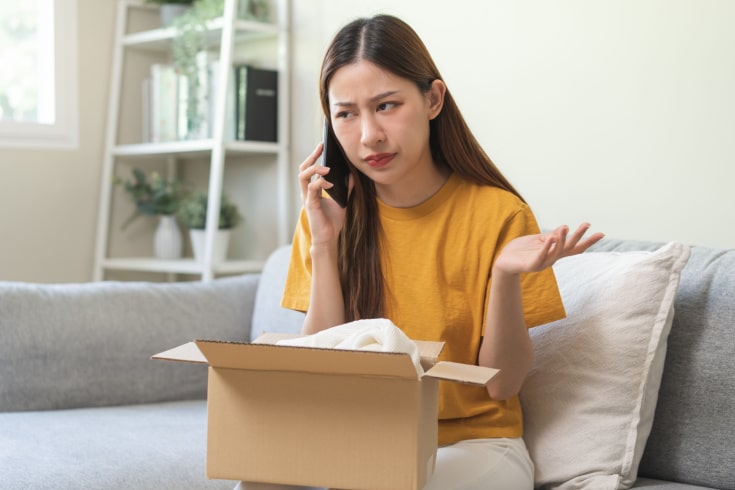
If a mall operator is aware that products with numerous confirmed serious accidents are being sold in stores and neglects this fact beyond a reasonable period, resulting in mall customers who purchased said products from the stores suffering damage from similar product accidents, the operator may be held liable for tort or for breaching their duty of care to mall users (a breach of duty accompanying the mall’s usage contract), even under special circumstances.
According to the National Consumer Affairs Center of Japan’s report on “Troubles Related to Digital Platforms,” examples of consumer life consultation troubles related to shopping malls include:
- Issues such as “the ordered product did not arrive,” “a different product arrived than what was ordered,” “the product image was different,” “the product arrived with defects,” or “an accident occurred when using the product” when ordering from a sales business operator (store) in a shopping mall.
- Cases where the consumer seeks a refund, return, or exchange after a trouble occurs, but the sales business operator does not respond.
- Cases where there is no response from the sales business operator, or it is impossible to contact them because their contact information is not displayed on the site.
To deter such troubles, the Cabinet Office’s “Expert Study Group Report on the Nature of Transactions on Online Platforms” (dated April 11, 2019) calls for “Initiatives by Platform Operators” such as:
- As basic and minimum safety confirmation items to ensure that the platform provides a healthy and safe transaction environment, understanding and appropriately utilizing accurate information related to the providers and purchasers/users.
- Publicizing the review criteria for store/listing reviews to the extent possible.
- Investigating and appropriately monitoring information provided by providers/users, purchasers/users, and consumer life consultants regarding transactions.
- Post-entry responses based on information provided by consumers, such as cautioning or advising withdrawal to users with frequent troubles.
- Cooperating with administrative agencies to address law-violating business operators.
At the very least, if the mall operator knows of the illegal act and fails to take prompt action, neglecting it even after a reasonable period has passed, they may be held responsible. Therefore, caution is necessary.
Summary: Consult Experts for E-Commerce Site Issues
While operators of online marketplaces and their users do not have a contractual relationship regarding individual transactions, they are bound by a user agreement concerning the use of the marketplace itself.
Therefore, it is considered that marketplace operators have a duty, as part of their obligations under the user agreement, to investigate and manage vendors and to maintain a proper transaction environment. It is also crucial to investigate problematic products or stores to prevent issues before they occur.
When operating a shopping mall, it is necessary to understand these legal responsibilities and ensure that consumers are not misled by the information presented. Proper investigation and response to stores are also required. Consulting with an attorney well-versed in the relevant Japanese laws and taking measures to prevent user disputes can be beneficial.
Guidance on Measures by Our Firm
Monolith Law Office is a law firm with extensive experience in both IT, particularly the internet, and legal matters. As the need for legal checks increases with the opening of online shopping malls, our firm provides tailored solutions.
Areas of practice at Monolith Law Office: Corporate Legal Affairs for IT & Startups

Category: General Corporate
Tag: General CorporateIPO
Related Articles
Points to Note When Ordering the Production of Hospital Reservation Sites and Referral Media Sit.
General Corporate
Understanding the Advantages and Disadvantages of 'Business Transfer' and 'Company Split'
General Corporate



Presumed Infringement and Criminal Penalties under Japanese Copyright Law: Legal Risks Companies.
General Corporate

Dispute Actions in Labor Union Act: Legal Legitimacy and Corporate Response Strategies
General Corporate