
[June 2023] What is the Newly Established "Detention Sentence" in the Penal Code Amendment? Explaining the Significance of the Amendment and 4 Key Points
![[June 2023] What is the Newly Established](https://monolith.law/en/wp-content/uploads/sites/6/2026/01/e58c821f439b572033c5a9d524990de0.webp)
In June of Reiwa 7 (2025), Japan will see the abolition of the long-standing penal sanctions of imprisonment and penal servitude, replaced by the newly established ‘confinement sentence.’ Post-June, imprisonment and penal servitude will be unified into a single system of confinement sentencing.
The traditional penal provisions were established over a century ago, and there has been an ongoing review of the nature and intended role of criminal punishment over the years. This amendment to the Criminal Code marks a significant turning point in Japanese criminal policy.
Therefore, this article will not only introduce the content of the recent reform but will also provide a detailed explanation of its background and significance.
What is Imprisonment? The Difference Between Penal Servitude and Imprisonment Under Japanese Law
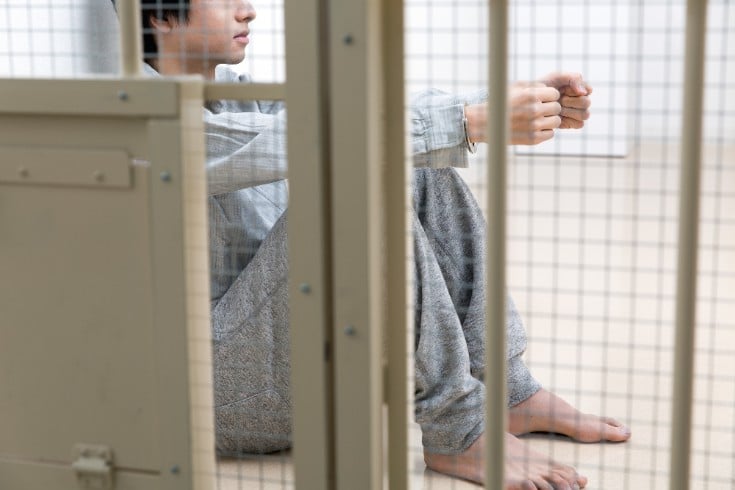
“Imprisonment” is a new type of penalty included in the Penal Code amendment bill submitted to the Japanese Diet by the Ministry of Justice in March of Reiwa 4 (2022). This amendment will change the system of “freedom penalties” in Japan.
“Freedom penalties” refer to punishments that deprive an individual of their liberty, and currently consist of three types: penal servitude, imprisonment, and detention. With this amendment, the distinction between penal servitude and imprisonment will be eliminated, and both will be unified under the term “imprisonment.” This realizes what is known as the “unification of freedom penalties.”
Pre-amendment Penal Code Article 9 (Types of Punishments)
“The principal punishments shall be the death penalty, penal servitude, imprisonment, fine, detention, and minor fine, with confiscation as an additional punishment.”
↓
Amended Penal Code Article 9 (Types of Punishments)
“The principal punishments shall be the death penalty, imprisonment, fine, detention, and minor fine, with confiscation as an additional punishment.”
Under the previous system of freedom penalties in Japan, penal servitude required mandatory labor, while imprisonment allowed for voluntary labor. However, in reality, since many prisoners serving imprisonment sentences engaged in work upon request (according to Article 93 of the Act on Treatment of Detainees and Others), distinguishing between penal servitude and imprisonment based on the presence of designated work was deemed meaningless (Kenji Takeuchi and Takeshi Honjo, “Criminal Policy Studies”).
On the other hand, under the new imprisonment system, whether an inmate will engage in penal labor will be determined based on their individual personalityistics. Instead of mandatory labor, there will be a greater emphasis on guidance and instruction aimed at preventing recidivism.
In the amended Penal Code, the pre-amendment Article 13 (Imprisonment) has been deleted, Article 12, Paragraphs 1 and 2 have been amended, and a new Paragraph 3 has been added.
Pre-amendment Penal Code Article 12, Paragraph 2
“Penal servitude shall involve detention in a penal institution and the performance of designated work.”
Pre-amendment Penal Code Article 13, Paragraph 2 [Deleted in the amended law]
“Imprisonment shall involve detention in a penal institution.”
↓
Amended Penal Code Article 12, Paragraph 2
“Imprisonment shall involve confinement in a penal institution.”
Amended Penal Code Article 12, Paragraph 3 [Newly established in the amendment]
“Those sentenced to imprisonment may be required to perform necessary work or receive necessary guidance for their rehabilitation.”
The establishment of the imprisonment penalty clarifies in the Penal Code that labor is not meant to inflict suffering on the prisoner but is a means for their rehabilitation and smooth reintegration into society. Both labor and guidance or educational instruction are now positioned as treatments of the same nature and of equal importance.
The Unification of Incarceration Sentences in Japan: A Historical Perspective
The debate to abolish the distinction between imprisonment and penal servitude, thereby unifying incarceration sentences, has been present since before World War II. During the comprehensive revision of the Penal Code in the 1960s, this issue was directly addressed, but the attempt ultimately failed.
However, the recent Penal Code amendment that introduced the system of confinement sentences proceeded with little opposition. Why might this be? Let’s take a look at the background of this reform.
Four Key Points Behind the Amendment
The Ministry of Justice states that the reason for this amendment is “to further enhance the treatment of inmates in criminal facilities.” (Source: Ministry of Justice “Reasons for the Amendment of the Penal Code and Other Related Laws”)
There are several backgrounds to this.
The Diminishing Need to Distinguish Between Imprisonment and Penal Detention in Japan
According to the 2024 (Reiwa 6) White Paper on Crime in Japan, there were 14,033 people (99.6%) serving terms of imprisonment, 49 people (0.3%) serving penal detention, and 3 people (0.0%) in custody. Furthermore, 81.8% of those serving penal detention were engaged in labor (as of the end of March 2024 (Reiwa 6), from the “2024 (Reiwa 6) White Paper on Crime”).
As the data suggests, the significance of distinguishing between imprisonment and penal detention has been diminishing in Japan.
Requests from the Correctional Facility Scene

Upon reflection, it is conceivable that among the elderly and disabled, there are those who find it difficult to engage in work activities. However, under Japanese law, prisoners serving a sentence of imprisonment with labor are obligated to work, leading to a situation where they are forced to perform tasks beyond their capabilities.
Furthermore, for prisoners who struggle with social life due to a lack of education, it might be more beneficial to provide educational guidance to improve their literacy rather than obligating them to work. Yet, due to the mandatory nature of work, there is insufficient time allocated for educational guidance aimed at enhancing their academic abilities.
The obligation for prisoners to engage in labor has been pointed out as an issue for the rehabilitation and reintegration of prisoners into society.
Efforts by the Japanese Government to Prevent Recidivism
Traditional penal sanctions in Japan have been criticized for their strong emphasis on punishment, with insufficient support for the rehabilitation and reintegration of offenders into society. Additionally, offenders were traditionally grouped based on criminal tendencies, without always giving due consideration to the specific crimes committed or their ages.
In response, the Japanese government has set a policy to enhance effective treatment based on empirical research and evidence, tailored to the individual personalityistics of each subject. A numerical target has been established to reduce the rate of re-incarceration within two years of release by 20% over a decade (as stated in the “Comprehensive Measures to Prevent Recidivism” of 2012 (Heisei 24)).
As part of these measures, the first phase of the recidivism prevention promotion plan includes the implementation of guidance and training in correctional facilities aimed at acquiring communication skills and business etiquette.
Addressing Young Offenders
In the context described above, there was a direct trigger for the establishment of the confinement sentence. This was related to the discussions about lowering the age of applicability of the Juvenile Law.
If the age of applicability of the Juvenile Law were to be lowered to under 18, 18 and 19-year-olds would no longer be subject to the Juvenile Law, and they would be subject to criminal penalties. However, the procedures based on the traditional Juvenile Law allowed for flexible responses tailored to the personalityistics of the juveniles, and it was well-regarded from the perspective of improving education for juveniles and preventing recidivism. Therefore, it was considered necessary to review the content and execution of the penalties for 18 and 19-year-olds, and consequently, to review the treatment of all prisoners. For example, 18 and 19-year-olds are typically in the age range of high school to college students, but when criminal penalties are imposed, they are obligated to work, which does not allow sufficient time for educational guidance to improve academic abilities.
In light of these considerations, the Juvenile Law and Criminal Law Subcommittee of the Legislative Council made a recommendation to the Minister of Justice, which included “unifying imprisonment and penal servitude into a single system of new liberty penalties.”
Responding to the Introduction of Confinement Sentences in Japan
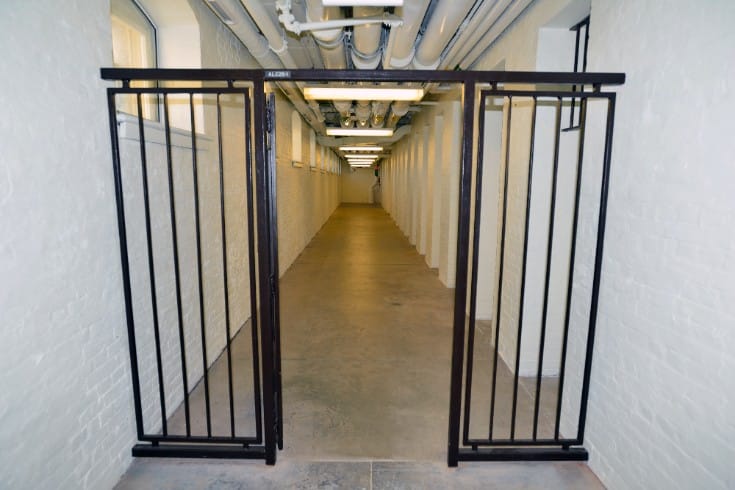
The confinement sentence, established against this backdrop, is gradually becoming clearer. According to reports, prisoners will be divided into 24 types of correctional treatment courses, such as “juvenile treatment,” “young adult treatment,” “elderly welfare,” and “welfare support” for those with mental illnesses, among others. It appears that individualized treatment will be provided according to the personalityistics of each group.
In preparation for the introduction of confinement sentences, criminal facilities, including prisons, are rapidly making preparations. However, there are challenges on the ground. For example, it is generally required to separate prisoners serving different types of sentences. With the introduction of confinement sentences, prisons will have to manage a mix of prisoners serving confinement sentences and those serving imprisonment sentences, necessitating the separation of their living quarters. This not only requires additional staffing but also raises concerns about the lack of physical space.
Summary: Consult a Lawyer for Criminal Cases
The introduction of the detention sentence from June 1, 2025 (Reiwa 7), marks a significant turning point in Japan’s criminal justice system. This reform aims to prioritize the rehabilitation and reintegration of offenders into society and to ensure public safety through the prevention of recidivism.
However, when involved in a criminal case, engaging a lawyer as a specialist is the best course of action. If you are arrested in a criminal case, you can choose not to have a lawyer during voluntary defense before or after indictment. Nevertheless, not having a lawyer can be greatly disadvantageous for the suspect or defendant, so it is advisable to appoint one.
Even if you lack financial resources, you may still be able to use systems such as the “Criminal Suspect Defense Assistance System” or a “court-appointed attorney.” If you become a suspect or defendant in a criminal case, please consider utilizing these systems.
Guidance on Measures by Our Firm
Monolith Law Office is a legal practice with high expertise in both IT, particularly the internet, and law. Our firm supports a wide range of businesses, from Tokyo Stock Exchange Prime-listed companies to venture companies, by deeply understanding their business models and operations to identify potential legal risks and ensure the legality of their business activities. Please refer to the article below for more details.
Areas of practice at Monolith Law Office: IT & Venture Corporate Legal Services

Category: General Corporate
Tag: General CorporateIPO
Related Articles

Understanding 'Superior Misrepresentation' under the Japanese 'Premiums and Representations Act'.
General Corporate



What Happens if You Are Sued for a Nursing Care Accident? An In-Depth Explanation of Facility Li.
General Corporate

The Concept of "Commercial Transactions" in Japanese Commercial Law: An Explanation of Its Class.
General Corporate

Key Points to Check When Signing a Consultation Contract Regarding Management and Other Matters
General Corporate

Legal Regulations on Advertising and Promotional Activities such as Stealth Marketing in the Foo.
General Corporate