
What is the Crime of Photography? Explaining the Differences between Nuisance Prevention Ordinances and Illegal Acts
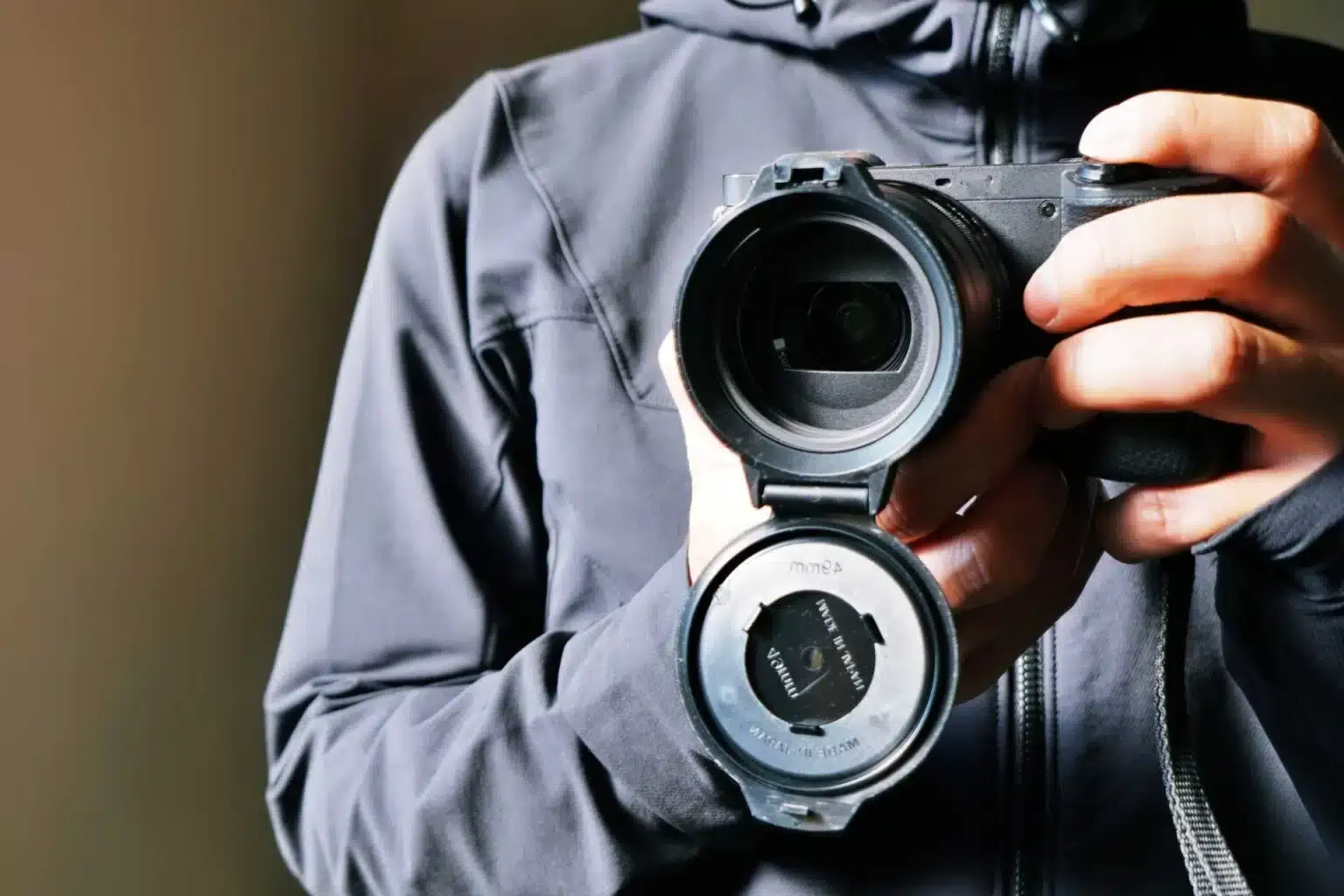
In recent years, the prevalence of smartphones and other devices has led to an increasing trend in the number of voyeurism cases being detected. Furthermore, the ease of purchasing small cameras over the internet means that anyone could potentially become a victim of voyeurism at any time.
In July of 2023, the Act on Punishment of Sexual Image Recording and Erasure of Electromagnetic Records Containing Sexual Images (hereinafter referred to as “the Act“) was enforced, introducing a new offense specifically for the act of unauthorized recording. This law differs from previous laws and ordinances by directly penalizing the act of voyeurism itself, with more severe punishments now in place.
This article will explain the offense of unauthorized recording, detailing what kinds of actions constitute this crime. It will also introduce other actions that are subject to punishment under this law.
Understanding the Newly Established “Photography Crime” Under Japanese Law
Crime of photography (satsuei-zai) refers to the offense of secretly taking photographs of sexual body parts or sexually suggestive poses without the subject’s consent and without a legitimate reason.
The law stipulates various punishable acts and penalties related to sexual images, and crime of photography is one of the punishable offenses under this law. The specifics of this are outlined in the Act as follows:
(Recording of Sexual Poses, etc.)
Source: e-gov | Act on Punishment of Sexual Image Recording and Erasure of Electromagnetic Records Containing Sexual Images
Article 2: A person who commits any of the following acts shall be punished by imprisonment for not more than three years or a fine of not more than three million yen.
1. Without a legitimate reason, secretly photographing the following poses or similar (hereinafter referred to as “sexual poses, etc.”), excluding those that are exposed or taken by oneself in places where people normally wear clothing and are aware that they are visible to an unspecified number or many people (hereinafter referred to as “target sexual poses, etc.”)
(The rest is omitted)
For example, this includes acts such as secretly taking photographs of exposed sexual parts in places like changing rooms or bathing facilities where people are undressed, or surreptitiously inserting a camera under a skirt to take photos of underwear.
Previously, sexual voyeurism was regulated by nuisance prevention ordinances in various prefectures. However, there were cases where application was difficult, criticisms that the penalties were too lenient, and above all, the number of voyeurism detections has been increasing in recent years due to the proliferation of smartphones and small cameras. Against this backdrop, the crime of photography was established.
Note that the application of this is from the enforcement date of July 13 2023, so even if the crime is discovered after the enforcement date, crime of photography does not apply if the act was committed before the enforcement date.
Differences between the Crime of Photography and Violations of the Nuisance Prevention Ordinance

The crime of photography differs from violations of the Nuisance Prevention Ordinance (meiwaku boshi jourei), in that, it is uniformly applied nationwide, unlike the ordinances.
Nuisance Prevention Ordinances are established by each prefecture, so the penalties and provisions vary from one prefecture to another. In the past, there have been cases where it was impossible to apply the ordinance because it was not possible to determine the prefecture where the act was committed, such as inside an aircraft in flight or a bullet train. However, with the establishment of the crime of photography, it is now possible to apply the law uniformly across the country, and the penalties are consistent.
Furthermore, crime of photography extends the scope of punishable acts beyond just the act of taking photographs. It also targets the storage and transmission of illicitly taken videos and images, making it easier to apply the law over a broader range of activities compared to the Nuisance Prevention Ordinance.
The penalties for the crime of photography have also become more severe. Under the Tokyo Metropolitan Nuisance Prevention Ordinance, the penalty for a first-time or non-habitual offender is imprisonment for up to one year or a fine of up to 1 million yen, while habitual voyeurism can result in imprisonment for up to two years or a fine of up to 2 million yen. On the other hand, the penalty for the crime of photography is imprisonment for up to three years or a fine of up to 3 million yen (Article 2, Paragraph 1 of the Act), which is more severe compared to violations of the Nuisance Prevention Ordinance. The statute of limitations for public prosecution is three years from the time the offense is completed.
In addition, Article 8 provides for the confiscation of images and videos, and Articles 9 to 13 provide for the deletion of images and videos or orders for deletion. Illegally taken images and videos can be confiscated and deleted by the prosecutor, or the prosecutor can issue an order for their deletion.
Under the Nuisance Prevention Ordinance, images and videos seized by investigative authorities are handled according to Article 19 of the Penal Code, so they cannot be forcibly confiscated if the case is not prosecuted. Even if prosecuted, copies other than the original are not subject to confiscation, and property owned by someone other than the perpetrator is also excluded, which meant that confiscation and deletion of voyeuristic images were not possible previously.
Under the crime of photography, it is explicitly stated that not only the original but also copies of videos and images taken through illegal acts can be confiscated. This is a beneficial measure for victims, preventing the circulation of illicitly taken videos and images.
Related article: What Happens When You Upload Videos Taken in No-Photography Areas or Voyeur Videos to YouTube?
Types of Photography Crimes Under Japanese Law

Photography crimes in Japan are categorized into various types, each with its own set of components. In this section, we will explain the components and types of photography crimes under Japanese law.
Illicit Photography of Sexual Poses
Illicit photography of sexual poses refers to the act of secretly capturing images of a person in a sexual posture without a legitimate reason, commonly understood as voyeuristic behavior. The definition of a sexual pose is stipulated in Article 2, Paragraph 1 of the Act as follows:
(i) A person’s sexual parts (meaning the genitals, the anus or its surrounding area, the buttocks, or the breast area, hereinafter the same in this item) or the part of the underwear that a person is wearing (limited to those that are usually covered by clothing and used to cover the sexual parts) that is actually directly or indirectly covering the sexual parts at the time
(ii) In addition to the items listed in (i), the pose of a person during acts of obscenity or sexual intercourse (meaning sexual intercourse, etc., as defined in Article 177, Paragraph 1 of the Penal Code (Law No. 45 of 1907)
Source: e-gov | Act on Punishment of Sexual Image Recording and Erasure of Electromagnetic Records Containing Sexual Images
Body parts such as the buttocks and breasts, areas of underwear that are not normally visible, as well as obscene acts and sexual intercourse are considered sexual poses. The act of secretly capturing these poses without a legitimate reason is punishable.
Specifically, this includes acts such as taking photographs under a skirt, capturing images of someone undressed in toilets or changing rooms, and filming sexual activity without the consent of the person involved.
Non-Consensual Photography
Non-consensual photography refers to the act of taking photos of a person in a sexual pose without their consent, often in situations where it is difficult for the individual to give consent. The punishment for non-consensual photography is defined under Article 2, Paragraph 2 of the Act as follows:
Article 2, Paragraph 2: An act of capturing a person’s sexual pose, etc., by taking advantage of a situation where the person is unable to form, express, or fulfill an intention not to consent due to actions or circumstances listed in each item of Article 176, Paragraph 1 of the Penal Code or other similar actions or circumstances.
Source: e-gov | Act on Punishment of Sexual Image Recording and Erasure of Electromagnetic Records Containing Sexual Images
Acts that place an individual in a situation where it is difficult to consent to photography include:
- Forcing compliance through assault or threats
- Taking advantage of a person’s mental or physical disability
- Administering alcohol or drugs to render the person unable to resist
- Exploiting a state of unclear consciousness due to sleep, etc.
- Catching the person off guard, not allowing time to form or express an intention not to consent to photography
- Creating a state of inability to resist due to fear or surprise in the face of an unexpected situation
- Inducing a state of inability to resist due to feelings of powerlessness or fear stemming from past abuse
- Using economic or social status to induce a state of inability to resist due to fear of disadvantage if the photography is refused
For example, forcibly taking photographs through acts of violence or threats, or secretly capturing the sexual pose of someone who is intoxicated or unconscious, are actions that fall under this category.
Photography Under False Belief
This refers to the act of deceiving the subject of the photograph to capture sexual images or videos, defined in Article 2, Paragraph 3 of the Act as follows:
3. The act of photographing a person’s sexual posture or the like by causing them to mistakenly believe that the nature of the act is not sexual, or that the images or videos will not be viewed by anyone other than a specific person, or by taking advantage of such mistaken beliefs.
Source: e-gov | Act on Punishment of Sexual Image Recording and Erasure of Electromagnetic Records Containing Sexual Images
For example, this includes acts where the photographer deceives the subject by explaining that the content of the image or video is ‘artistic’ and not sexual, or by taking advantage of the subject’s mistaken belief to carry out the photography. Even if the subject is aware that the content is sexual, convincing them to consent to the photography by assuring that “it will not be shown to any third parties” is also subject to penalties under Japanese law.
Photographing Minors Under 16
Photographing persons under the age of 16 in a sexual manner without a legitimate reason is punishable under the crime of photography, even if consent has been given. However, if the subject of the photograph is between the ages of 13 and under 16, the photographer will not be subject to punishment if the age difference between the photographer and the subject is less than five years.
The laws regarding the sexual filming of minors under 16 are stipulated in Article 2, Paragraph 4 of the Act as follows:
4. Without a legitimate reason, photographing the sexual posture of a person under thirteen years of age, or photographing the sexual posture of a person aged thirteen or older but under sixteen by a person who was born on a date more than five years prior to the date of birth of the subject.
Source: Act on Punishment of Acts of Photographing Sexual Poses and Other Related Acts and the Erasure of Electromagnetic Records of Sexual Poses Recorded on Seized Items | G-GOV
The requirement of “a person who was born on a date more than five years prior” is determined by whether the photographer was born at least five years before the birthdate of the subject. This is to exclude cases such as high school couples in a relationship, where the age difference between the photographer and the subject is within five years, from being subject to punishment.
However, even in cases where the age difference is within five years, acts of secretly taking photographs, non-consensual photography, or photography based on mistaken belief will still be subject to punishment under the crime of photography as mentioned above.
Attempted Offenses
In the composition of the crime of photography under Japanese law, there are instances where an attempt can be punishable even if it does not lead to actual filming. According to Article 2, Paragraph 2 of the Act, an attempt of the crime prescribed in the preceding paragraph shall be punished. This means that even attempted acts that constitute the crime of photography are subject to punishment.
For example, cases where a smartphone is inserted under a skirt but no filming takes place, or where a small camera is installed in a changing room but is discovered before anyone changes, are considered attempts. These attempted acts are punished in the same manner as if the secretive filming had been successful, so even if the filming is not completed, if the act of starting to film can be evaluated as such, it may be punished as an attempted crime of photography.
By treating attempts on the same level as completed crimes, it has become possible to punish and deter voyeuristic behavior more broadly.
Other Acts Subject to Punishment Under the Act

The Act stipulates punishable acts and penalties not only for photography but also for other related offenses. Even if a person has not directly taken sexual images or videos, there are four acts and corresponding penalties that could be prosecuted under this law other than the crime of photography.
Crime of Supply
The crime of supply applies when a person supplies images or videos that fall under the crime of photography to specific individuals or a small group, knowing that they were illegally taken (Article 3 of the Act). Even if you did not take the images or videos yourself, providing third-party voyeuristic images or videos constitutes the crime of supply.
This was established to prevent the spread (especially the sale) of voyeuristic images and videos, punishing not only the act of taking photos but also the act of dissemination.
The penalties for the crime of supply are imprisonment for up to three years or a fine of up to 3 million yen if materials have been provided to a specific and small group, and imprisonment for up to five years or a fine of up to 5 million yen applies if materials have been provided to an unspecified large number of people.
Crime of Storage
Even if a person does not provide sexual images or videos taken in acts that fall under the photography crime, storing them with the intent to provide or publicly display constitutes the crime on its own (Article 4 of the Act). The penalties are imprisonment for up to two years or a fine of up to 2 million yen.
Storage of such images or videos, knowing they fall under the crime of photography, even if not for the purpose of providing them to others, is subject to the crime of storage. This allows for the confiscation and deletion of the targeted images or videos, preventing their sale, transfer, and further dissemination.
Crime of Transmission
Transmitting images or videos of a sexual nature taken in acts that fall under the crime of photography to an unspecified large number of people constitutes the crime of transmission under Article 5.
Similar to the crime of supply, the penalties for transmitting to an unspecified large number of people or public display are imprisonment for up to five years or a fine of up to 5 million yen. Additionally, making consent difficult or transmitting based on false belief are also punishable offenses.
Crime of Recording
Recording downloaded images or videos that are known to be illegally taken and fall under the transmission crime constitutes the recording crime. The penalties are imprisonment for up to three years or a fine of up to 3 million yen.
While the transmission crime applies to the act of transmitting sexual images or videos that fall under the crime of photography, those who knowingly record illegal images or videos are also punished under the crime of recording. Attempted offenses are also punishable, similar to the crime of photography.
Cases Not Constituting the Crime of Photography
The crime of photography, as stipulated in the articles, hinges on whether there is a legitimate reason for the act. For instance, photographing a naked body part as part of a legitimate medical procedure, or capturing images of one’s own child bathing for the sake of recording growth or preserving memories, could be considered as having a legitimate reason and may not be subject to the crime of photography.
Another issue that has become a social problem in recent years is the surreptitious photography of athletes. Cases where spectators take unauthorized photos of athletes wearing tight uniforms at gymnastics or track and field competitions have been reported.
Even in cases of athlete (or sports) photography, it is difficult to establish the crime of photography if the images captured are of athletes during a competition without focusing on sexual parts.
On the other hand, malicious acts of photography, such as zooming in on an athlete’s chest or buttocks, could potentially be considered as obscene behavior and violate public nuisance ordinances. Furthermore, if images or videos taken without an athlete’s consent are uploaded to the internet, it could lead to a defamation charge if it is deemed to lower the athlete’s social standing.
Summary: Consult an Attorney if You Are Harmed by Unauthorized Photography

In today’s world, where many people carry smartphones with cameras, and where small cameras can be easily purchased, anyone is at risk of becoming a victim of unauthorized (or voyeuristic) photography. Furthermore, the risk of images and videos taken without consent being spread through social media and live streaming on the internet is significant.
If you find yourself in a situation where images or videos of you in a sexual context have been taken without your consent, it is crucial to prevent the further spread of such material. Not only should the photographer be strictly punished, but measures must also be taken to promptly confiscate or delete the images and videos.
Under the Act on Punishment of Sexual Image Recording and Erasure of Electromagnetic Records Containing Sexual Images, unauthorized photography is subject to stricter penalties than those provided by the conventional nuisance prevention ordinances, allowing for the confiscation and deletion of recorded images and videos. Moreover, the law targets not only photography but also various other acts, broadening the scope of punishable offenses.
If you fall victim to illegal photography, it is advisable to consult with an attorney. By seeking prompt and accurate legal assistance, you can minimize the damage from voyeuristic conduct.
Guidance on Measures Provided by Our Firm
Monolith Law Office is a legal practice with extensive experience in both IT, particularly the internet, and law. In recent years, information related to reputational damage and defamation spread online has caused serious harm as a ‘digital tattoo.’ Our firm offers solutions to combat ‘digital tattoos,’ and we provide detailed information in the article below.
Areas of practice at Monolith Law Office: Digital Tattoo

Category: General Corporate
Tag: General CorporateIPO
Related Articles

What is an Internal Control System? Obligations Under the Japanese Companies Act and Financial I.
General Corporate

An Overview of J-KISS in Japanese Startup Investments and Its Differences from SAFE and Converti.
General Corporate

Explaining the Basics of the EU's Digital Markets Act (DMA): What is its Impact on Japan?
General Corporate

Can You Claim Compensation for Property Damage Due to Suspension of Transactions or Decrease in .
General Corporate

What is the Legal Responsibility of Shopping Mall Operators? Explaining the Cases Where Operator.
General Corporate

Understanding Family Governance: What Business Owners Should Build to Prevent Asset and Business.
General Corporate