Does Generating 'Voices' with AI Constitute Copyright Infringement? (#2 Creation and Utilization Phase)
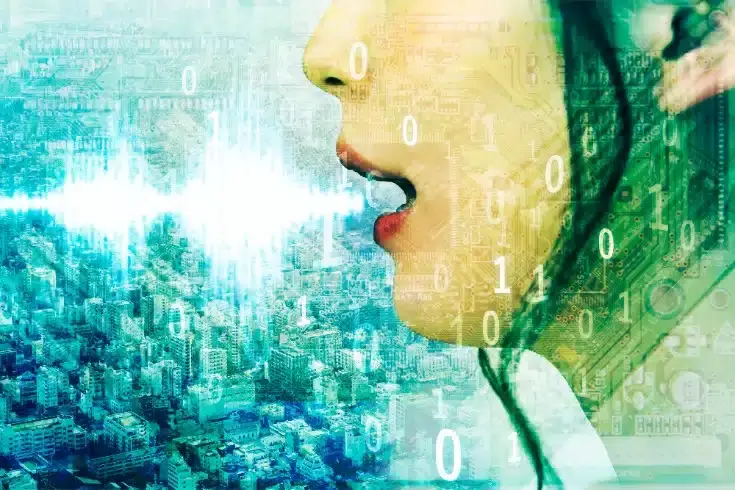
With the advancement of generative AI technology, it has become possible to easily learn and generate the ‘voices’ of existing singers and voice actors. In the business scene, this technology allows for the learning and creation of new ‘voices’ in app development, game development, and anime production.
Having generative AI learn and create new ‘voices’ based on those of existing singers and voice actors could potentially constitute copyright infringement or other illegal activities. In reality, the interpretation of such issues is not yet clearly defined.
Here, we will explain the potential for infringement of copyright, related rights, and publicity rights during the generation and use stages of generative AI. Legal issues at the development and learning stages are discussed in this article (Part 1: Development and Learning Stages). Please refer to it as well.
Three Usage Patterns in the Generation and Utilization Phases
Even when we simply say “generate voices using generative AI,” it’s necessary to consider the process in the following two stages:
- Development and Learning Stage
- Generation and Utilization Stage
The first stage is carried out by AI developers, while the second is typically performed by AI users.
When visualized, these processes are as follows:
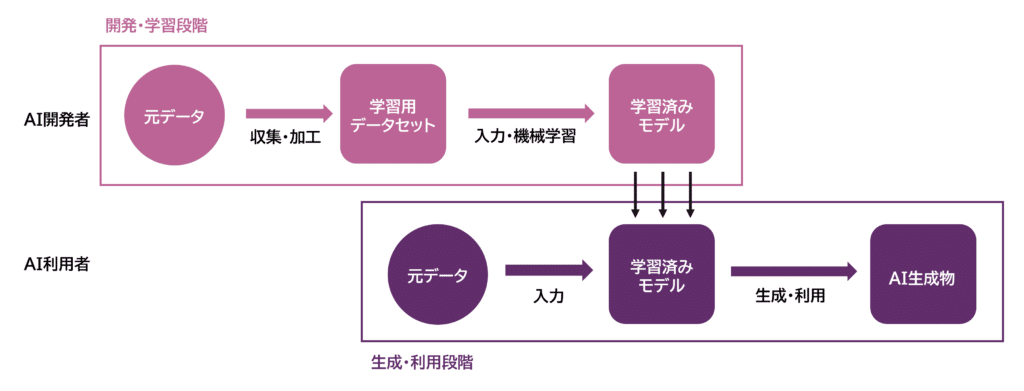
During the Development and Learning Stage, original human voice data is collected and accumulated as training data for AI development, and a training dataset is created. Subsequently, this dataset is fed into the AI for machine learning, resulting in a trained model. These tasks are usually performed by AI developers.
In the Generation and Utilization Stage, the trained generative AI is given original data to produce and utilize AI-generated content. These tasks are typically performed by AI users.
There are three anticipated usage patterns in the Generation and Utilization Stage:
- Pattern 1: Inputting a human voice into the AI to generate AI-created content that is different from the original voice data.
- Pattern 2: Inputting a human voice into the AI to generate AI-created content that is identical or similar to the original voice data.
- Pattern 3: Inputting data other than human voice data into the AI to generate AI-created content that is identical or similar to the voice data of an actual person.
In the following, we will briefly explain the potential rights infringements that each usage pattern may cause.
Pattern 1: Inputting Human Voices into AI to Generate Distinct Outputs

First, let’s discuss potential rights infringements that can occur when human voices are inputted into AI to generate outputs that differ from the original voice data.
Relation to Copyright
Specifically, Pattern 1 can involve actions such as inputting a particular singer’s vocal data into a voice recognition AI that identifies the singer, or inputting both a specific singer’s voice and the AI user’s voice to generate vocal data that mimics the singer using the AI user’s voice.
In terms of copyright, the issue arises when existing copyrighted works are inputted into AI. Such actions fall under “information analysis” (Article 30-4, Paragraph 2 of the Japanese Copyright Law), and as such, copyrighted works can be used in any manner deemed necessary for information analysis within recognized limits. Therefore, if the use is necessary for information analysis, it does not constitute copyright infringement within those recognized limits.
Relation to Neighboring Rights
In relation to neighboring rights, Article 102 applies the provisions of Article 30-4 of the Copyright Law by analogy, so the aforementioned input actions do not generally result in infringement of neighboring rights.
Relation to Publicity Rights
In the case of Pattern 1, let’s assume that the voice inputted into the AI belongs to a specific celebrity. When using voice data of a specific celebrity, if the usage falls under one of the three types of infringement modes explained in the Part 1 (Development and Learning Phase), it constitutes an infringement of publicity rights and the action is deemed a tort.
However, in this instance, even if the inputted voice data is that of a specific celebrity, since the voice data is merely inputted and analyzed by the generative AI, it does not fall under the three infringement modes.
Therefore, it can be said that there is no room for the usage to constitute an infringement of publicity rights.
Pattern 2: Inputting Human Voices into AI to Generate Identical or Similar Data
Pattern 2 involves inputting a specific singer’s vocal data along with lyrics and melody data into an AI system to generate vocal data of the same lyrics and melody in the singer’s voice. This can be broadly divided into three actions:
- The act of inputting vocal data into AI
- The act of creating AI-generated works based on that data
- The act of utilizing the AI-generated works
With these as a premise, we will analyze the relationship with the following rights:
Relation to Copyright
First, in terms of copyright, all three actions—input, creation, and use—could potentially constitute copyright infringement.
Regarding the input, as with Pattern 1, the act of inputting data is, in principle, not considered copyright infringement under Article 30-4. However, there is a significant exception to this principle. If the purpose of creating the AI-generated work is to reproduce the essential personalityistics of the expression in the original data (expression output purpose), then Article 30-4 does not apply, and the act becomes illegal. In the case of Pattern 2, the expression output purpose is mostly affirmed. Therefore, it is likely to be considered copyright infringement.
Next, regarding the creation, in the case of Pattern 2, data identical or similar to an existing copyrighted work is generated, which constitutes an infringement of the right of reproduction (Article 21). Thus, the likelihood of copyright infringement is high.
Finally, regarding the use, the act of utilizing works identical or similar to the existing copyrighted works generated in step 2 constitutes an infringement of the right of reproduction (Article 21) and the right of public transmission (Article 23). Therefore, the likelihood of copyright infringement is high.
Relation to Neighboring Rights
The relationship with neighboring rights includes complex issues that are still not definitively settled in practice and thus require careful consideration.
Currently, as with the above, Article 102 applies the provisions of copyright, namely Article 30-4, by analogy, so the likelihood of infringing neighboring rights is generally low.
Relation to Publicity Rights
Among the actions from 1 to 3, inputting in step 1 and creating in step 2 are unlikely to infringe on publicity rights, as they do not fall under the three types of infringement modalities.
However, the use in step 3, if it involves commercial utilization such as sales, does fall under the three types of infringement modalities and thus has a high likelihood of infringing on publicity rights.
Pattern 3: Feeding Non-Voice Data into AI to Generate Identical or Similar Data to Actual Human Voices
Relation to Copyright Law
Pattern 3 involves, for example, inputting a specific voice actor’s name to generate speech audio data of that voice actor. The issue here is whether the AI-generated content is dependent on existing copyrighted works.
In conclusion, if the AI user is aware of the existing copyrighted work and uses AI with the intention of generating identical or similar AI-generated content, the prevailing view is that there is dependency.
For instance, if an AI user generates AI content with the specific purpose of replicating a certain voice actor’s voice, this would fall under such a case. Therefore, in such instances, there is a high likelihood of copyright infringement.
Relation to Neighboring Rights
Even if AI is used to generate performances that are identical or similar to existing ones, such acts are not considered “recordings” of the existing performances, and therefore do not infringe upon neighboring rights.
Relation to Publicity Rights
In terms of publicity rights, issues arise when the generated voice is used for commercial purposes. While detailed case-by-case considerations are possible in practice, it is sufficient to grasp the conclusion.
In conclusion, if an AI user intentionally generates a voice identical or similar to that of a specific celebrity and uses the generated voice, it constitutes an infringement of publicity rights. Cases where the similarity is achieved unintentionally are complex and still open to much debate in practice, so they are omitted from this article.
Conclusion: Consult Experts on the Relationship Between Generative AI and Copyright in Japan
Thus far, we have explained the legal rights associated with human voices and the problematic actions that may arise when utilizing them, based on specific examples.
When it comes to the legal rights of human voices, it is crucial to consider the ‘content’ and ‘sound’ separately, and to understand the significance of copyright, related rights, and publicity rights.
For the problematic actions, it is necessary to focus on what exactly constitutes the issue. The act of generating voices using generative AI is currently a topic of various discussions in both practical and business contexts. When starting a new business, keep the above points in mind and strive to use generative AI appropriately.
Related article: Could Generating Voices with AI Lead to Copyright Infringement? (#1 Development and Training Phase)
Guidance on Measures by Our Firm
Monolith Law Office is a law firm with extensive experience in both IT, particularly the internet, and legal matters. In recent years, generative AI and intellectual property rights surrounding copyright have garnered significant attention, and the need for legal checks has been increasingly on the rise. Our firm provides solutions related to intellectual property. Please refer to the article below for more details.
Areas of practice at Monolith Law Office: IT and Intellectual Property Legal Services for Various Companies
Category: IT