
What is the Low-Altitude Economic Zone? Explaining the Latest Trends in Legal Regulations Related to the Drone Business
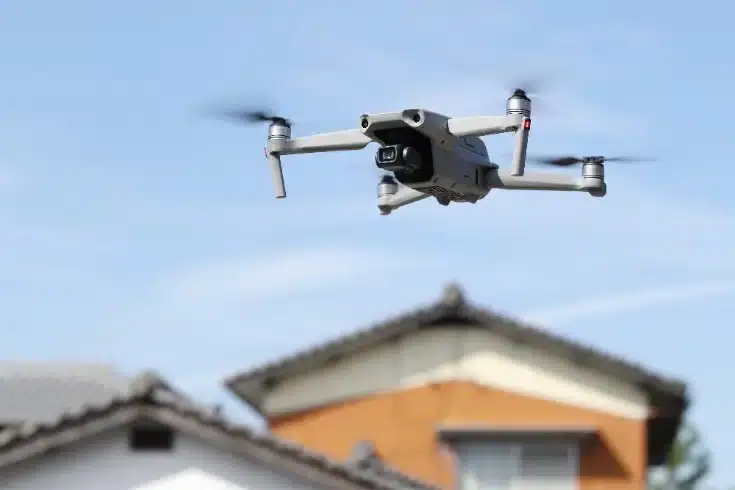
In recent years, technological innovations in drones and eVTOLs (Electric Vertical Take-Off and Landing vehicles) have advanced, drawing attention to the new economic activities in the ‘low-altitude airspace’ below 1,000 meters from the ground, known as the ‘low-altitude economic zone.’
Particularly, with the 2025 Osaka-Kansai World Expo on the horizon, the development of related legal regulations in Japan is accelerating.
This article provides an overview of the current legal regulations centered on drone business and details the regulatory reforms associated with the Osaka Expo.
Understanding the Low-Altitude Economic Zone in Japan
The practical application of new services such as drone logistics and “flying cars” is anticipated within Japan’s low-altitude economic zone.
Definition of the Low-Altitude Economic Zone
The “low-altitude economic zone” refers to the airspace not around the altitude of approximately 10,000 meters where space and aircraft navigate, but rather the airspace below 1,000 meters above ground level, and the economic activities that take place within this region.
Traditionally, the use of airspace has been strictly limited due to regulations under the Aviation Law. However, with the practical application of drones and flying cars in sight, new regulatory relaxations and system developments are being advanced.
Business Opportunities in the Low-Altitude Economic Zone
The following business uses are expected for the low-altitude economic zone:
- Logistics: Drone delivery to avoid urban traffic congestion
- Monitoring & Inspection: Infrastructure inspection and security services
- Tourism: New modes of transportation with flying cars
- Disaster Response: Rapid transport of relief supplies to disaster-stricken areas
- Agriculture: Utilization of drones in precision agriculture for pesticide spraying and crop growth management
- Medical: Transport of emergency medical supplies and applications in telemedicine
Regulations and Permit/Approval Procedures for Drone Flight in Japan
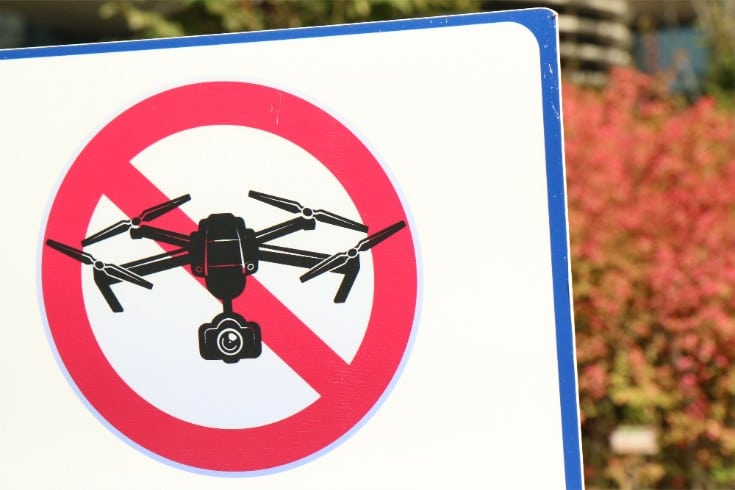
Drone flight in Japan is subject to various rules, and obtaining the necessary permits or approvals is essential.
Key Regulations Related to Drone Flight
When operating a drone, it is primarily necessary to comply with the following Japanese laws:
- Aviation Law (under the jurisdiction of the Ministry of Land, Infrastructure, Transport and Tourism): Establishes general rules for drone flight.
- Act on Prohibition of Flying Unmanned Aircrafts around Key Facilities (under the jurisdiction of the National Police Agency): Prohibits drone flights around important facilities.
- Road Traffic Law (under the jurisdiction of the National Police Agency): Regulates takeoff, landing, and flight over public roads.
- Radio Law (under the jurisdiction of the Ministry of Internal Affairs and Communications): Regulates the use of radio waves by drones utilizing wireless communication.
In addition, drones weighing 100 grams or more are legally required to be registered. The registration process is conducted through DIPS2.0 (Drone Infrastructure System), where owner information and drone details must be entered. After completing identity verification and paying the fee, an identification number is issued.
The issued identification number must be displayed on the drone, and if the drone is equipped with a remote ID, online transmission is also possible. The registration is valid for three years, and renewal procedures are necessary for continued use. Flying an unregistered drone can result in penalties, so be sure to complete the registration in advance.
Flight Permissions and Approval Procedures Under Japanese Aviation Law
Under Japanese Aviation Law, it is required to obtain permission or approval from the Minister of Land, Infrastructure, Transport and Tourism when operating drones under the following conditions.
Cases Requiring Permission
Permission from the Minister of Land, Infrastructure, Transport and Tourism is necessary when flying drones in the following no-fly zones:
- Around airports (restricted surfaces such as airfields)
- Densely Inhabited Districts (DID areas)
- Airspace above 150 meters from the ground or water surface
- Emergency operation zones
Reference: Ministry of Land, Infrastructure, Transport and Tourism “Expansion of No-Fly Zones Around Airports for Unmanned Aircraft“
Reference: Ministry of Internal Affairs and Communications “About the Boundary Maps of Densely Inhabited Districts“
Cases Requiring Approval
Prior approval from the Regional Civil Aviation Bureau Director is required when intending to operate unmanned aircraft in the following manners:
- Nighttime flights
- Beyond visual line of sight flights
- Flights within less than 30 meters of people or property
- Transporting hazardous materials
- Dropping objects
Furthermore, regardless of the airspace, method of flight, or location of operation, the following must be adhered to when operating unmanned aircraft:
- Do not operate under the influence of alcohol or drugs
- Conduct pre-flight checks
- Operate to prevent collisions with aircraft or other unmanned aircraft
- Do not operate in a manner that causes nuisance to others
Reference: Ministry of Land, Infrastructure, Transport and Tourism “No-Fly Zones for Unmanned Aircraft and Methods of Operation“
Application Procedures for Permits and Approvals
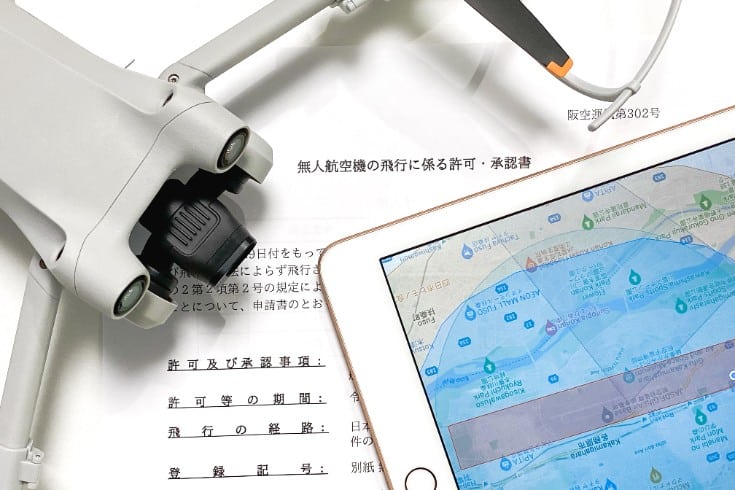
In the realm of aviation law in Japan, when conducting flights (specific flights) that require permission or approval from the Minister of Land, Infrastructure, Transport and Tourism, it is fundamentally necessary to go through the flight permission and approval procedures.
Moreover, operating an unmanned aircraft without obtaining the appropriate permissions or approvals can result in imprisonment or fines, making it essential to apply for the necessary permits and approvals correctly.
Applying Online with DIPS2.0 (Drone Information Platform System)
With DIPS2.0, you can log in using the login ID and password obtained during the drone registration process. From the “Flight Permission and Approval Application” menu, enter the following information:
- Aircraft information (manufacturer, model, registration mark)
- Pilot information (whether a skill certificate is held)
- Flight date, time, location, and altitude
- Flight purpose (e.g., surveying, aerial photography, pesticide application)
- Safety measures (existence of fail-safe functions, response in case of an accident)
Submission of Supporting Documents
Depending on the application details, the following documents must be submitted:
- Flight manual (standard manuals from the Ministry of Land, Infrastructure, Transport and Tourism can be used)
- Aircraft performance certificate (if applicable)
- Pilot’s experience certificate (if required)
- Permission to use the flight area (in case of private land)
Also, if there are any deficiencies in the application form, you may be asked to make additional corrections, so be sure to provide detailed information.
Application Deadline
The application must be made at least 10 business days (excluding Saturdays, Sundays, and holidays) before the planned flight start date.
If there are any deficiencies in the application, it may take additional time for confirmation, and it is possible that permission or approval may not be obtained by the scheduled flight date.
Since the review process takes time, it is advisable to apply at least one month in advance.
Procedures After Obtaining Permission or Approval
Once you have obtained the necessary permission or approval, the following procedures are required before you can actually commence flight operations.
Receipt of Permission or Approval Certificate
Once approved, a permit will be issued on the DIPS2.0 system. Make a note of the permit number and print it out if necessary to carry with you.
Advance Notification of Flight Plans
Advance notification of flight plans is a system where operators intending to conduct specific flights with unmanned aircraft must notify the Minister of Land, Infrastructure, Transport and Tourism in advance, detailing the date, time, route, and other aspects of the planned flight.
If you conduct a specific flight without notifying the flight plan, you may be fined up to 300,000 yen under the provisions of the Aviation Law, so caution is necessary.
Reference: Guidelines for Notification of Flight Plans for Unmanned Aircraft
Creation of Flight Logs
When conducting specific flights with unmanned aircraft, it is mandatory to promptly record information on flights, maintenance, modifications, and other relevant data in the flight log.
If you fail to have a flight log during a specific flight, or if you fail to record the required information or make false entries in the flight log, you may be fined up to 100,000 yen, so caution is necessary.
Reference: Handling Guidelines for Flight Logs of Unmanned Aircraft
Reference: Guidelines on the Handling of Flight Logs for Unmanned Aircraft
Regulations Under the Japanese Unmanned Aerial Vehicle Act
While the use of small unmanned aircraft (such as drones) is expanding, incidents involving flights near critical facilities have also occurred. In light of these incidents, to protect the functions of important facilities, the Japanese Unmanned Aerial Vehicle Act regulates the flight of small unmanned aircraft in specified areas.
Facilities Designated Under the Japanese Unmanned Aerial Vehicle Restriction Law
Under the Japanese Unmanned Aerial Vehicle Restriction Law, the flight of small unmanned aircraft and similar devices is prohibited over and around critical facilities within an approximate 300-meter radius.
The following facilities are subject to this regulation:
Reference: National Police Agency “Regulations Related to the Unmanned Aerial Vehicle Restriction Law“
- National key facilities, etc.
- The National Diet Building, Prime Minister’s Official Residence, Supreme Court, Imperial Palace, etc.
- Buildings of crisis management administrative agencies
- Offices of designated political parties
- Designated foreign embassies and consulates, etc.
- Designated defense-related facilities
- Designated airports
- Designated nuclear facilities
Reference: National Police Agency “Designation of Facilities Under the Unmanned Aerial Vehicle Restriction Law“
Reference: National Police Agency “Announcements from the Police Regarding the Unmanned Aerial Vehicle Restriction Law“
Facilities Designated Under the Special Measures Law
- Event venues, etc.
- Airports
The “Special Measures Law” referred to in the Small Unmanned Aircraft Flight Prohibition Law is officially known as the “Act on Special Measures for Handling Specific Serious Incidents,” and it is a law that establishes special measures to add “event venues, etc.” to the facilities subject to the Small Unmanned Aircraft Flight Prohibition Law. The Special Measures Law aims to prevent crimes such as terrorism and ensure the safety of events by temporarily regulating the flight of small unmanned aircraft in specific periods and locations.
Specifically, it was enacted to regulate the flight of small unmanned aircraft in and around large-scale event venues such as the Rugby World Cup held in Japan in 2019 (Reiwa 1) and the Tokyo Olympics and Paralympics held in 2020 (Reiwa 2).
Under this Special Measures Law, during these event periods, the flight of small unmanned aircraft was prohibited, except for the facility managers, those with their consent, landowners, and others with legitimate reasons.
Exceptions to the No-Fly Rule
While flying over the designated facilities mentioned above is generally prohibited, the no-fly regulations do not apply in the following cases:
- Flights conducted by the facility manager or with their consent
- Flights conducted over the property by the landowner or equivalent
- Flights carried out for the operations of the national or local government bodies
However, even in the above cases, consent from the facility manager is required when flying over the airspace of defense-related facilities and airport premises or zones in Japan.
Notification Procedures Required for Exceptions to the No-Fly Zone Regulations Under Japanese Law
Even in cases that qualify as exceptions to the no-fly zone restrictions, when operating small unmanned aircraft and similar devices above and around approximately 300 meters of the designated facilities, it is necessary to report to the prefectural public safety commission or equivalent authorities.
Reference: National Police Agency “Overview of Notification Procedures Based on the Small Unmanned Aircraft No-Fly Law“
Regulations Under the Japanese Road Traffic Act
When utilizing drones that involve the use of public roads, they are subject to regulations under the Japanese Road Traffic Act.
Takeoff, landing, and operation on public roads are prohibited. It is illegal to fly a drone over a road without permission. Furthermore, when using public roads, it is necessary to apply to the local police station for a road usage permit.
Additionally, flights that obstruct the passage of vehicles or pedestrians are prohibited.
Regulations Under the Japanese Radio Act
For the use of drones that emit radio waves, it is generally necessary to obtain permission from the Minister of Internal Affairs and Communications in Japan. However, if the radio equipment falls under the category of low-power radio stations or specified low-power radio stations, no license or registration for the radio station is required.
A low-power radio station refers to radio equipment that emits extremely weak radio waves. It is commonly used in industrial applications such as remote-controlled helicopters for pesticide spraying. If the equipment meets the technical standards, it will display the Low-Power Radio Station Conformity Mark (ELP mark).
Furthermore, a specified low-power radio station refers to a radio station that meets certain technical standards for specific uses. While no license or qualification is needed to handle such equipment, it is necessary that the equipment has received a technical standard conformity certification. Whether the equipment has received this certification can be verified by the presence of a Technical Conformity Mark (often referred to as the “TELEC mark”).
However, caution is needed when using drones manufactured overseas. Drones without the TELEC mark cannot be used within Japan.
Moreover, even if a product has the TELEC mark, if the product is modified, the TELEC mark must be removed. Using a radio device without the TELEC mark can result in a violation of the Japanese Radio Act.
Illegal use of radio waves can lead to imprisonment for up to one year or a fine of up to one million yen.
Reference: Ministry of Internal Affairs and Communications, Japan “About Radio Equipment Used in Drones, etc.“
Reforms Related to Drones Accompanying the Osaka Expo
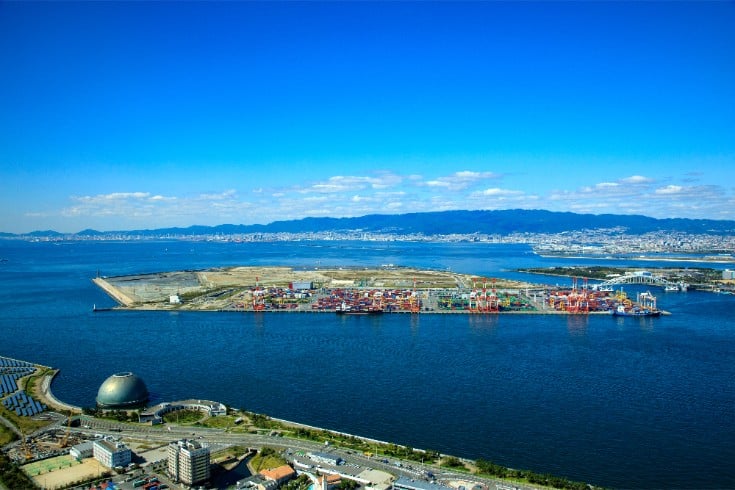
At the Osaka Expo, flying cars will be on display. Unfortunately, commercial use at the Expo has been postponed, but efforts are being made to create an environment conducive to the realization of flying car and drone businesses.
During the Expo, traffic management will be implemented, including the dissemination of airspace and route information, coordination of flight plans, monitoring, and information provision. This is expected to have a positive effect on the establishment of a management system related to drones.
Reference: Osaka Expo “Flying Cars“
Challenges in the Legal Regulation of Drones in Japan
As explained thus far, the flight application process for drones is complex and requires a considerable amount of time. Therefore, simplification of the application process is under consideration.
Issues Under Review for Category II Flights
The Japanese government, in its “Recommendations for Regulatory Reform” (dated May 31, Reiwa 6 (2024)), aims to promote the commercialization of drones by targeting a one-day approval process for unmanned aircraft flight applications.
Furthermore, the government has announced the revision of the “Examination Guidelines for Permissions and Approvals of Category II Flights” (published in February of Reiwa 7 (2025), with implementation planned for March), which aims to simplify the application process and expedite the review for such permissions and approvals.
Category II flights refer to specific flights that do not pass over third parties. This is expected to shorten the application process significantly.
Introduction of UTM (Unmanned Aircraft System Traffic Management)
To realize the coexistence of drones and manned aircraft in low-altitude airspace, the implementation of an Unmanned Aircraft System Traffic Management (UTM) is underway. This is expected to enable the sharing of real-time flight information, the establishment of collision avoidance technology, and the integrated management of multiple operators.
Until now, the DIPS function was used to notify operators of overlapping flight plans and adjustments were made via email, which was time-consuming and cumbersome.
However, by utilizing UTM providers recognized by the aviation authorities in the future, it is planned to provide support for adjusting flight plans, monitor movements, and issue alerts in case of deviations from the route, enabling multiple operators to conduct high-risk flights within the same airspace.
In the final stage, it is planned to create an environment where all unmanned aircraft within designated airspace will use UTM providers approved by the aviation authorities, allowing for consistent traffic management before, during, and after flights, and realizing more dense operations.
Reference: Policy on System Development for Unmanned Aircraft Operation Management (UTM)
Expected Effects of UTM Development
In the future, there is an expected increase in demand for Level 4 flights, which are beyond visual line of sight (BVLOS) operations without observers in populated areas, and Level 3.5 flights, which are BVLOS operations in uninhabited areas, in sectors such as transportation and emergency supply delivery during disasters.
Related article: Expansion of the Scope of Drone Use with Level 4 Flights: Explaining the Two Systems of Airframe Certification and Skill Certification
As UTM development progresses, the sharing of multiple drones’ flight plans, flight statuses, maps, weather information, etc., will enable safe and efficient BVLOS operations for drones, and the realization of high-density operations is anticipated.
This is expected to lead to a more vibrant transportation business utilizing drones.
Reference: Ministry of Land, Infrastructure, Transport and Tourism, Civil Aviation Bureau, Unmanned Aircraft System Safety Division “Efforts of the Civil Aviation Bureau on Flying Cars/Drones“
Summary: Real-Time Adaptation to Legal Reforms is Essential for Drone Business
The low-altitude economic zone is expected to be one of Japan’s new growth industries. In connection with the transportation industry’s 2025 issue, the demand for drone-based delivery services is anticipated to increase even further in the future.
However, as explained in this article, in the wake of the Osaka-Kansai World Expo, legal regulations and management systems within the low-altitude economic zone are being reformed on a daily basis. Businesses are required to respond in real-time to the administrative trends. To seize business opportunities, companies must properly understand these rules and develop their business strategies accordingly.
Guidance on Measures by Our Firm
Monolith Law Office is a law firm with high expertise in both IT, particularly the internet, and legal matters. Recently, with the amendments to aviation laws, drones have garnered significant attention in the business sector. Our firm possesses specialized knowledge regarding drone business. Please refer to the article below for more details.
Areas of practice at Monolith Law Office: IT & Venture Corporate Legal Services

Category: General Corporate
Tag: General CorporateIPO
Related Articles


What is Digital Wage Payment (Digital Salary)? Explaining Implementation Examples and Procedures
General Corporate

Probationary Periods and the Legal Status of Non-Regular Workers in Japanese Labor Law
General Corporate

What is the Crime of Photography? Explaining the Differences between Nuisance Prevention Ordinan.
General Corporate

Is It Permissible to Withhold Full Severance Pay Due to Disciplinary Dismissal? Explaining the S.
General Corporate